Tag: nitric oxide

  • I Took Beetroot Shots for 33 Days. My Blood Pressure Did Not Move.

    I Took Beetroot Shots for 33 Days. My Blood Pressure Did Not Move.

    This post contains affiliate links, marked where they appear. If you buy through one I may earn a small commission at no extra cost to you. Read on before you do, because I am about to spend fifteen hundred words telling you it did not work for me.

    It is 3am and I am looking at a spreadsheet that tells me I have spent about forty quid on beetroot and a month of pulling a face at seven in the morning, and got precisely nothing for it. Which is, annoyingly, exactly the outcome I said I would publish if it happened.

    So here it is. The beetroot juice blood pressure trial I pre-registered back in June is finished, and the answer is no.

    The result, before anything else

    My daytime resting blood pressure before the trial was 133/85. My daytime resting blood pressure during the trial was 133/85.

    Not close to it. Not within a point of it. The same number.

    PeriodSystolicDiastolicReadings
    June, before beetroot13385approx 400
    July, on beetroot13385559
    Difference00

    I said in the protocol, before I drank any of it, that I would call a 3 mmHg drop in systolic pressure a signal worth taking seriously. That number was not plucked out of the air. It is roughly the low end of what the published research on dietary nitrate reports, and I wanted to commit to a threshold before I had any data, so that I could not quietly move the goalposts later.

    I got zero. Not 2 mmHg that I could squint at and call promising. Zero.

    What I actually did

    One shot of Beet It Sport Nitrate 400 every morning, starting on 25 June and finishing on 27 July when the supply ran out. That is 33 days, not the 30 I pre-registered, because a box does not divide neatly into a calendar and I was not going to throw the last three away.

    I am flagging that deviation rather than rounding it down to 30 and hoping nobody checks. Three extra days in the same direction does not change the conclusion, but the entire point of writing the protocol down first was that I would have to own the bits that did not go to plan.

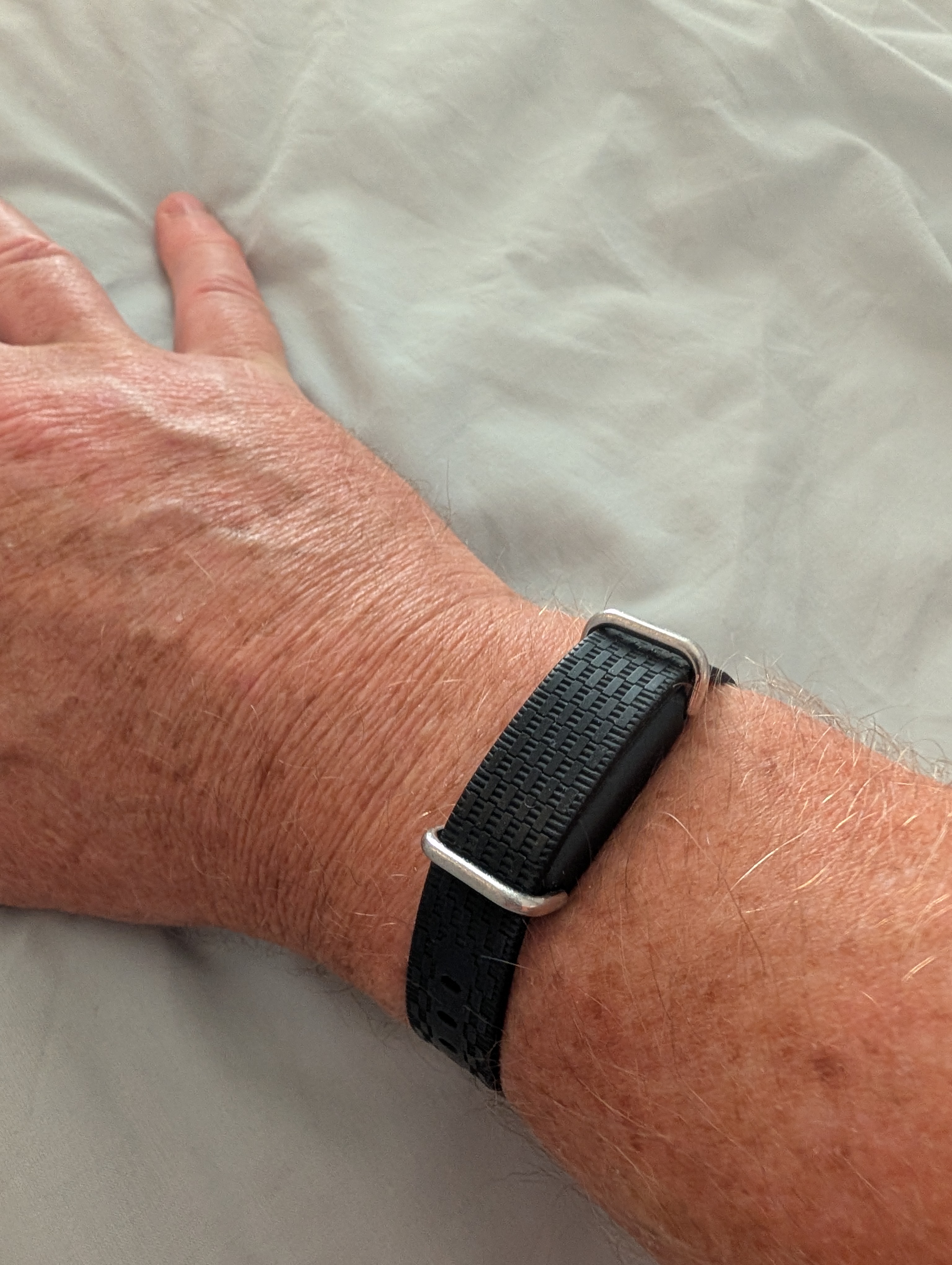
    Throughout, I wore the Hilo band continuously, as I have for two years. It takes readings on its own through the day and night without me doing anything, which is the whole reason this experiment was possible at all. A cuff would have given me one number a day taken at whatever moment I happened to remember. This gave me 824.

    I went looking for the effect anyway

    A single monthly average can hide things. An effect that built slowly, or faded, or only showed up in the first fortnight, would all average out to nothing. So I broke the whole month down week by week using every single reading, day and night, rather than the headline figure.

    WeekMean systolicReadings
    1 to 7 July128.1196
    8 to 14 July129.1218
    15 to 21 July128.6202
    22 to 27 July128.4208

    One millimetre of mercury of spread across four weeks, with no direction to it. The first ten days averaged 128.2 and the last ten days averaged 128.3.

    There is no effect hiding in there. There is no slow build. There is nothing to salvage.

    What this does not mean

    It does not mean beetroot does nothing for anyone. The research on dietary nitrate is real and I went through it properly in a separate reference piece before I started. What the studies mostly show is a modest effect, often larger in people who are not already medicated and not already being managed.

    I am neither of those. I have been on blood pressure medication since 2005 and I currently take lercanidipine and ramipril. It is entirely plausible that those are already doing the thing beetroot is supposed to do, and that there was simply no room left for it to work. That is a real explanation and I am not going to pretend it is not.

    It is also worth saying plainly what this study is. One person. No placebo. No blinding. No randomisation. I knew exactly what I was drinking and when, and I knew what I was hoping to see. Against that, the only real defences are that the measurement was automatic rather than something I chose to take when I felt like it, that the threshold was set in public before any data existed, and that there were 824 readings rather than a handful.

    The limitations I have to declare

    There was no upper arm cuff cross-check running alongside this. I disclosed that in the protocol and it stands as the biggest weakness. The Hilo calibrates monthly against a cuff, so it is not floating free, but I was not taking independent cuff readings in parallel to verify the trend.

    July was not a controlled month either. It was hot and we were away in the van twice. What it was not, and I checked this properly rather than guessing, is a month where my training fell apart. I ran 17 times during the dosing period, covering 134 kilometres in a little over 19 hours, which is three or four steady runs a week. That is about as consistent as I get. If anything the training got harder towards the end: my four fastest runs of the whole period all fall in the last ten days, averaging 7 minutes 53 per kilometre against 8 minutes 13 earlier in the month, and at a higher average heart rate to go with it. So the exercise side of my life was not quietly cancelling out a beetroot effect. It was, if anything, pointed the same way the beetroot was supposed to be, and the number still did not move.

    The last three days did run slightly higher, at 130.7 systolic against 128.6 for the month. I am not going to build a story out of that. It sits inside the normal daily spread, where individual days ranged from 124.3 to 132.6 throughout.

    On the affiliate link

    I have left the link to the product in this post, and I want to be straight about why.

    One person’s result is not evidence about yours, and the published research is genuinely more encouraging than my month was, particularly for people who are not medicated. If you have read all of that and want to try it, the link is there and it works.

    But I would rather you did not buy it because of me. I ran this properly and it did nothing, and quietly deleting the link so the failure looks tidier would be its own kind of dishonesty. So it stays, with the result attached to it.

    What happens next

    The protocol called for a 14 day washout after the last dose, which takes it to 10 August. I am still wearing the band, so that data is collecting itself whether I think about it or not.

    Honestly, I expect it to show nothing, because you cannot wash out an effect that never arrived. But I said I would publish it, so I will, and if it surprises me then that will be the more interesting post of the two.

    Was it worth doing

    Forty pounds and a month of mornings, for an answer of no.

    Yes, though. Before this I had a vague sense that beetroot was one of those things that probably helped a bit, picked up from headlines and supplement adverts at 3am. Now I know what it does for me specifically, which is nothing, and I can stop wondering about it and stop buying it.

    That is worth forty quid. The band that measured it cost rather more, and this is the clearest example I have had yet of why I wear it.

    None of this is medical advice. I am a bloke with a spreadsheet and a wrist band, not a doctor. Do not change any medication on the strength of a blog post. Talk to your GP.


    I’m Pete Harrison. I’m 55, I run a business, and I have a mild case of insomnia that means I spend a lot of time at 3am reading about gadgets, gear and ways to make life work better. Things I Learnt at 3am is where I write honestly about the things I’ve actually bought, tested and lived with. No fluff, no rehashing the spec sheet. Just the real verdict from someone who uses this stuff every day.

  • Dietary Nitrate and Blood Pressure: What the Research Actually Shows

    Dietary Nitrate and Blood Pressure: What the Research Actually Shows

    This page is a reference summary of the published research on dietary nitrate and blood pressure. It is not medical advice. If your blood pressure is elevated, talk to your GP. I am a layperson who reads a lot at 3am.

    Last reviewed: June 2026.

    Affiliate disclosure: this page contains affiliate links, including to the Beet It shot and the Hilo monitor I use. I bought both with my own money. All views are my own.

    The link between dietary nitrate blood pressure reduction is real, reasonably well supported by clinical evidence, and almost always misused by the supplement industry to sell you something that doesn’t work. This page tries to separate those two things.

    What dietary nitrate is and how it works

    Dietary nitrate is an inorganic compound found in high concentrations in certain vegetables, principally leafy greens and root vegetables. Spinach, rocket, beetroot, and celery are the richest sources. It is not the same as the nitrates used as preservatives in processed meat, though the chemistry is related.

    The mechanism is straightforward and well understood. Dietary nitrate (NO3) is absorbed in the small intestine and concentrated in saliva. Bacteria on the tongue and in the mouth convert it to nitrite (NO2). In the stomach and bloodstream, nitrite is converted to nitric oxide (NO). Nitric oxide relaxes and widens the smooth muscle in blood vessel walls, reducing peripheral vascular resistance and therefore reducing blood pressure.

    This is not speculative biochemistry. It is the same fundamental mechanism exploited by glyceryl trinitrate (GTN spray), which has been used in cardiology for angina since the 1870s. The dietary route is slower and more sustained than the pharmaceutical route, but the underlying chemistry is the same.

    What the research shows on dietary nitrate blood pressure effects

    The clinical evidence for dietary nitrate and blood pressure is reasonably robust for a nutritional intervention. That is a deliberately cautious framing: it is not as strong as the evidence for antihypertensive medication, but it is substantially stronger than the evidence for most supplements.

    A 2013 Cochrane systematic review examined 16 randomised controlled trials of inorganic nitrate or nitrate-rich foods in adults. It found a mean reduction in systolic blood pressure of approximately 4.4 mmHg and diastolic of approximately 1.1 mmHg. Effect sizes were larger in studies using higher doses and in participants with elevated BP at baseline.

    A 2017 meta-analysis published in the Journal of Nutrition (Siervo et al.) covering 22 randomised trials found mean systolic reductions of 3.55 mmHg and diastolic reductions of 1.32 mmHg in healthy adults. In participants with hypertension at baseline, effect sizes were consistently at the higher end.

    A 2022 meta-analysis in Nutrients covering 43 trials found consistent systolic reductions in the 3-5 mmHg range across populations, with larger effects in older adults and those with higher baseline BP.

    A 3-5 mmHg reduction in systolic BP sounds small. It is not trivial. Population-level modelling suggests a sustained 2 mmHg reduction in mean systolic BP would reduce stroke mortality by around 10% and coronary heart disease mortality by around 7%. These are meaningful numbers at scale. For an individual, the clinical significance depends entirely on where your BP starts.

    The honest limitations: most trials are short, the majority running for two weeks or less. Evidence for sustained effects beyond 4-6 weeks in free-living populations is limited. Almost all trials are conducted under controlled conditions that are difficult to replicate in daily life. Effect sizes in trials tend to be larger than effects observed in real-world use. The evidence is stronger for acute effects than for sustained long-term reduction.

    The dose question

    This is where most dietary nitrate supplements fail, and where the marketing becomes actively misleading.

    The trials showing meaningful BP reductions consistently used doses in the range of 300-500 mg of dietary nitrate per day, with 400 mg being the most commonly cited threshold. To hit 400 mg from food alone requires approximately 200-250g of fresh spinach, a large bunch of rocket (roughly 150g), two medium beetroots (roughly 300g raw weight), or around 150g of celery.

    Most commercial beetroot supplements, gummies, powders and capsules do not disclose their nitrate content. Those that do frequently contain 50-100 mg per serving, which is 25-50% of the threshold dose used in the research. A supplement that does not disclose its nitrate content cannot be evaluated against the evidence base and should be treated with scepticism.

    The products used most frequently in the published research are standardised beetroot juice shots that guarantee a specific nitrate content per serving. The Beet It Sport Nitrate 400 shot (James White Drinks) is the most commonly used in UK academic research, delivering 400 mg dietary nitrate per 70 ml shot with Informed-Sport certification.

    The mouthwash problem

    This is the most practically important point on this page and the one most consistently omitted by supplement marketing.

    The dietary nitrate mechanism depends entirely on oral bacteria. If you kill those bacteria, you eliminate most or all of the blood pressure effect.

    Antibacterial mouthwashes containing chlorhexidine, and to a lesser extent cetylpyridinium chloride, kill the oral bacteria responsible for converting nitrate to nitrite. A 2013 study by Govoni et al. found that chlorhexidine mouthwash used twice daily reduced the blood pressure effect of dietary nitrate by approximately 90%. A 2019 study by Woessner et al. confirmed that antiseptic mouthwash substantially attenuated the nitric oxide response to nitrate supplementation.

    The practical implication: if you are using antibacterial mouthwash while taking dietary nitrate supplements, you are likely wasting your money. Standard fluoride toothpaste does not have this effect. The problem is specific to antibacterial mouthwash.

    Who should not use dietary nitrate

    If you take any medication containing organic nitrates for heart conditions or chest pain, including glyceryl trinitrate (GTN spray), isosorbide mononitrate, or isosorbide dinitrate, do not combine with dietary nitrate supplementation without medical advice. The combination can produce an additive vasodilatory effect and cause a dangerous drop in blood pressure.

    If you take phosphodiesterase-5 inhibitors for erectile dysfunction or pulmonary hypertension, including sildenafil (Viagra), tadalafil (Cialis), or vardenafil (Levitra), do not combine with dietary nitrate. The interaction can cause a severe, potentially dangerous drop in blood pressure.

    If you are already taking antihypertensive medication, dietary nitrate may produce an additive effect on blood pressure. This is not necessarily dangerous, but it is worth discussing with your GP before starting. If you are monitoring your own BP at home, a continuous monitor like the Hilo gives you far more data points than an occasional cuff reading, which matters when you are looking for a small signal in noisy data.

    One practical note: dietary nitrate from beetroot causes beeturia in a significant proportion of people, meaning pink or red colouration of urine and sometimes stools. This is harmless. It is caused by betalain pigments, not the nitrate itself. It will alarm you the first time if no one warned you.

    The supplement industry problem

    The research on dietary nitrate is real and the supplement industry has noticed. The result is a category of products that cite genuine science to sell products that do not replicate the conditions of that science.

    The specific patterns to watch for: products that do not disclose nitrate content per serving; products that claim proprietary extraction processes make them more bioavailable than standardised alternatives (there is no evidence base for this); testimonials from named individuals claiming specific mmHg reductions within specific timeframes.

    The clinical trials show mean reductions of 3-5 mmHg across populations. An individual testimonial claiming a reduction from 148/94 to 122/79 in 60 days is not evidence of the product working. It is a number that could reflect regression to the mean, lifestyle changes, medication adjustment, measurement error, or fabrication. The existence of real science in this area does not validate testimonials that exceed what the science shows.

    A live trial using this evidence base

    I am currently running a pre-registered 30-day n=1 trial of Beet It Sport Nitrate 400 for blood pressure, using a Hilo continuous BP monitor as the measurement instrument. The protocol, including the pre-specified hypothesis, baseline values, analysis plan and verdict criteria, was published before Day 1.

    The launch post is here and the pre-registration protocol is here. Results follow approximately 24 July 2026. If you want to understand how I am measuring and tracking BP as part of a broader health picture, the joined-up health data post covers that in detail, and there is a practical how-to guide for building your own health dashboard if you want to do something similar.

    The trial does not prove anything about dietary nitrate generally. It is one person’s data, with acknowledged confounders, using a single measurement instrument. What it does is apply this evidence base honestly to a real situation and report what happens without moving the goalposts.


    I’m Pete Harrison. I’m 55, I run a business, and I have a mild case of insomnia that means I spend a lot of time at 3am reading about gadgets, gear and ways to make life work better. Things I Learnt at 3am is where I write honestly about the things I’ve actually bought, tested and lived with. No fluff, no rehashing the spec sheet. Just the real verdict from someone who uses this stuff every day.

  • I’m Testing Beetroot for Blood Pressure. Here’s Exactly What I’m Trying to Prove, Before I Start.

    I’m Testing Beetroot for Blood Pressure. Here’s Exactly What I’m Trying to Prove, Before I Start.

    Bought with my own money. No commercial relationship with Beet It or James White Drinks. This post contains affiliate links, including to the beetroot shot I’m using and the Hilo monitor I measure with.

    It was 3am and I was reading about beetroot. Not for the first time. But this time I’d actually ordered some to run a proper beetroot blood pressure trial, and I had that specific low-level anxiety you get when you’ve committed money to testing a claim and you’re not entirely sure you’ll be honest with yourself about what you find.

    The anxiety is the point. I know how this goes. You try something, your numbers improve, you decide it worked. Maybe it did. Maybe you were sleeping better that week. Maybe you’d been less stressed, or done more steps, or eaten less salt. Maybe the beetroot did absolutely nothing and you just got lucky with the timing. You’ll never know, because you didn’t decide in advance what “worked” would actually look like.

    So this page exists to stop me doing that. This is the pre-registered protocol for a beetroot blood pressure trial: the hypothesis, the baseline, and exactly what I’ll count as a result — all written before Day 1. I can’t change any of it once the trial starts. If I do, I’ll say so.

    The launch post explaining why I’m doing this is here, if you want the story before the protocol.

    The beetroot blood pressure trial hypothesis

    One Beet It Sport Nitrate 400 shot every morning for 30 days will reduce my mean daytime systolic blood pressure by 3 mmHg or more, compared to my June 2026 baseline.

    Three millimetres of mercury. That threshold comes from the published literature: it’s around the lower end of what the trials show for dietary nitrate in people with elevated BP. Anything smaller than that and I can’t distinguish signal from the natural day-to-day variation in my readings. If you want the full breakdown of the studies and their effect sizes, I’ve written it up on the dietary nitrate evidence summary page.

    The baseline

    I’ve been wearing a Hilo continuous blood pressure monitor every day since 2022. It’s a Class IIa medical device, clinically validated, not a consumer fitness tracker pretending to measure BP. It takes readings through the day and night using optical sensors and gives me a running picture of what my blood pressure is actually doing, rather than a single clinic reading taken while I’m already tense about being in a clinic. Full review here.

    My baseline for this trial is the June 2026 Hilo monthly report. That’s the month immediately before the trial starts, and the most recent stable period I have before I introduce any intervention.

    MetricValue
    Mean daytime systolic133 mmHg
    Mean daytime diastolic85 mmHg
    Mean daytime HR73 bpm
    Daytime systolic SD3 mmHg
    Daytime readings400

    The standard deviation of 3 mmHg matters. It means my baseline is actually quite tight: 400 readings clustering closely around 133. So a genuine 3 mmHg signal would have to emerge through a distribution that doesn’t have much give in it. That’s either good (the threshold is meaningful) or bad (the noise will drown any real effect). Either way, it’s what the data shows, and I’m not adjusting the threshold to make it easier.

    One limitation I’m stating upfront: I don’t have a clinical upper-arm cuff for weekly cross-checks during this trial. The Hilo is consistent and validated, but it produces trend-grade values rather than absolute gold-standard readings. It’s the right tool for tracking change within a person over time, which is exactly what I’m using it for. I’ll be honest about that ceiling in the results post.

    The intervention

    Beet It Sport Nitrate 400. One 70ml shot every morning for 30 days, starting 25 June 2026. Same time each morning, with food. Informed-Sport certified, 400mg dietary nitrate per shot, which is the dose the actual research uses.

    One specific rule worth knowing about: no antibacterial mouthwash during the trial. The nitrate mechanism depends on oral bacteria converting nitrate to nitrite in your mouth before your body can use it. Chlorhexidine mouthwash kills those bacteria, and there’s good evidence that it can knock out most of the BP effect on its own. I’m not using mouthwash. I’m telling you this because it’s one of those things the supplement ads never mention, even though it’s in the same literature they’re citing to sell you the product.

    The washout

    After Day 30, I stop the shots and monitor for another 14 days. If BP drifts back toward 133 during that window, it strengthens the case that the intervention was doing something. If it stays low, that weakens it. Either way I’m reporting what happens, not what I was hoping for.

    The analysis

    Three comparisons: intervention mean versus baseline, washout mean versus baseline, washout mean versus intervention. Shown as a time series with the three phases marked. Effect reported as a plain mmHg difference. No p-values: with one person’s autocorrelated daily data, a p-value would produce false confidence and I’d rather just say what happened.

    What I’ll count as a result

    Signal: Mean daytime systolic during intervention is 3 mmHg or more below baseline. That means 130 mmHg or lower.

    Null: Mean daytime systolic is less than 3 mmHg below baseline. Beetroot probably didn’t do what the science suggests it should.

    Inconclusive: Something changed but I can’t separate the beetroot from everything else that was changing at the same time. This is the most likely outcome, and I’ll say so plainly if it happens.

    These definitions are locked from Day 1. I can’t look at the results and then decide what the threshold should have been.

    The confounders I’m already aware of

    This is the honest problem with this experiment, and I’m putting it here rather than at the end because it matters.

    During these same 30 days I’m rebuilding aerobic fitness after a knee injury. More exercise lowers blood pressure. I’m also trying to sleep longer than my current short average. Better sleep lowers blood pressure. My body composition is changing. That affects blood pressure too. Any improvement I see during the trial could come from any of those things, or some combination of all of them, with beetroot contributing nothing at all.

    I’m keeping a daily confounder log for exactly this reason. It won’t make attribution clean. But it means the results post will at least be honest about what else was moving.

    Pre-registration published 25 June 2026. Results to follow approximately 24 July 2026 (end of intervention) and 7 August 2026 (end of washout).


    I’m Pete Harrison. I’m 55, I run a business, and I have a mild case of insomnia that means I spend a lot of time at 3am reading about gadgets, gear and ways to make life work better. Things I Learnt at 3am is where I write honestly about the things I’ve actually bought, tested and lived with. No fluff, no rehashing the spec sheet. Just the real verdict from someone who uses this stuff every day.

  • I Was Awake at 3am Reading a Supplement Ad. So I Designed an Experiment to Test It.

    I Was Awake at 3am Reading a Supplement Ad. So I Designed an Experiment to Test It.

    Affiliate disclosure: this post contains affiliate links, including to the beetroot shot I’m using in this trial and the Hilo monitor I measure with. I bought both with my own money. All views are my own.

    It was about 3am and I couldn’t sleep, which is not unusual. What was unusual was the thing I’d ended up reading. I’m not going to name it — naming it hands it search traffic — but it prompted me to design a proper beetroot blood pressure experiment of my own. Here’s why, and exactly what I’m testing.

    By the time I got to the part where she explained why cheap beetroot powder doesn’t work but this particular brand does, I was fairly sure I wasn’t reading a doctor’s confession. I was reading an advertisement.

    How I know it’s an advertisement (and why I still ran a beetroot blood pressure experiment)

    I’m not going to name the brand or the post. Naming it hands it search traffic, and the pattern matters more than this particular example anyway.

    A real doctor writing about their own health doesn’t funnel you to a checkout page via a /pages/listicle URL. Real clinical advice doesn’t come with manufactured scarcity or a money-back guarantee designed to lower your purchase anxiety. The emotional hooks in that post, the dead mother, the kitchen counter tears, the sudden revelation, are lifted almost verbatim from a template used across thousands of supplement advertorials. The character changes. The story doesn’t.

    None of which means the underlying science is wrong. That’s the clever part. The post gets one thing right: most beetroot powders and gummies are under-dosed on nitrate, often to the point of being essentially useless. That true fact is then used to sell a fake solution. The implicit argument is that you need this specific brand, not the cheaper validated alternative that the actual research used.

    The genuinely dangerous bit, buried under the emotional story, is the suggestion that you might manage your blood pressure without medication.

    What the science actually says

    The research on dietary nitrate and blood pressure is real. It’s not fringe. A 2013 Cochrane review covering 16 randomised controlled trials found a mean reduction in systolic BP of around 4-5 mmHg. A 2022 meta-analysis covering 43 trials found consistent reductions in the 3-5 mmHg range. I’ve written up the full evidence summary separately if you want the detail on studies, doses, and honest limitations.

    The mechanism is well understood. Dietary nitrate gets converted by bacteria in your mouth to nitrite, then in the stomach and bloodstream to nitric oxide. Nitric oxide relaxes and widens blood vessels, reducing peripheral resistance. This isn’t speculative. It’s the same mechanism as glyceryl trinitrate (GTN spray), which has been used in cardiology for over a century.

    The dose matters. The 400mg threshold used in most of the positive trials is the number to hit. You can get there from food: around 200-250g of spinach, a large bunch of rocket, or two medium beetroots. Or from a standardised supplement shot designed to hit that threshold reliably every time.

    The advertorial brand doesn’t disclose its nitrate content. The Beet It Sport Nitrate 400 shot I’m using does: 400mg per 70ml shot, Informed-Sport certified, used in a substantial chunk of the academic research on this subject.

    My situation

    I’m 55. I’ve had medicated hypertension since 2005, managed with lercanidipine and ramipril. My Hilo continuous monitor (full review here) gives me a daytime mean of 133/85 across 400 readings from June 2026. That’s borderline Stage 1 under current UK guidelines, above where I’d like to be, and trending in a direction I’ve been watching closely since a knee injury knocked out most of my training last autumn. I wrote about the connection between that injury and my blood pressure numbers here, if you want the longer story.

    I’m not looking for an alternative to medication. I’m looking for an adjunct that might help, if the science is real.

    Why I’m writing this before I start

    Because I know how easy it is to fool yourself. You try something, your numbers improve, you conclude it worked. Maybe it did. Maybe you happened to sleep better that week, or do more exercise, or drink less. You’ll never know, because you didn’t decide in advance what “worked” meant.

    So I’ve pre-registered the trial. The full protocol, including the hypothesis, the baseline numbers, the analysis plan, and exactly what I’ll count as a result, is published at the pre-registration page before Day 1. I can’t move the goalposts once I’ve seen the data. If I change anything, I’ll say so explicitly.

    I’m using a month’s supply of Beet It, one shot every morning. I bought it with my own money. I have no connection to James White Drinks.

    Why I probably still won’t be able to tell you if it worked

    Here’s the honest problem, and it’s the same problem that makes the cardiologist’s testimonial worthless.

    During these 30 days I’m also rebuilding aerobic fitness after that knee injury. More exercise lowers blood pressure. I’m trying to sleep longer than my current short average. Better sleep lowers blood pressure. My body composition is actively changing. All of these things independently affect BP, and all of them are happening at the same time as the beetroot.

    Even with 13 months of baseline data, a pre-registered protocol, and a validated measurement device, I will probably not be able to cleanly say the beetroot caused whatever I observe. I might see a signal consistent with the hypothesis. I might not. But I won’t be able to say with any confidence that the beetroot specifically did it.

    This is the actual point. If I, with all of this infrastructure, can’t establish causation, then a stranger on the internet with a before-and-after photo and a checkout link definitely can’t. The cardiologist story is not evidence. My experiment is barely evidence. The difference is that I’m telling you that upfront.

    What to do about your blood pressure in the meantime

    Talk to your GP. That’s not a liability disclaimer. It’s the correct advice. Dietary nitrate is an adjunct at best. At borderline Stage 1, the right first move is a clinical conversation, not a supplement.

    A few things worth knowing if you’re considering this yourself. If you’re on antihypertensive medication, dietary nitrate could have an additive effect on blood pressure, so tell your GP before you start. If you take any medication containing nitrates, whether for erectile dysfunction or a heart condition, sildenafil, tadalafil, isosorbide mononitrate, GTN spray, do not combine them with dietary nitrate. The combination can cause a dangerous drop in blood pressure. And beetroot turns urine and sometimes stools pink or red. It’s harmless. But it will alarm you the first time if nobody warned you.

    What happens next

    Results post around 24 July, covering the full 30 days. Post-washout update around 7 August. If it does nothing, I’ll say so. If the confounders make the result unreadable, I’ll say that too.

    This post is not medical advice. I am a layperson experimenting on myself.


    I’m Pete Harrison. I’m 55, I run a business, and I have a mild case of insomnia that means I spend a lot of time at 3am reading about gadgets, gear and ways to make life work better. Things I Learnt at 3am is where I write honestly about the things I’ve actually bought, tested and lived with. No fluff, no rehashing the spec sheet. Just the real verdict from someone who uses this stuff every day.