This page is a reference summary of the published research on dietary nitrate and blood pressure. It is not medical advice. If your blood pressure is elevated, talk to your GP. I am a layperson who reads a lot at 3am.
Last reviewed: June 2026.
Affiliate disclosure: this page contains affiliate links, including to the Beet It shot and the Hilo monitor I use. I bought both with my own money. All views are my own.
The link between dietary nitrate blood pressure reduction is real, reasonably well supported by clinical evidence, and almost always misused by the supplement industry to sell you something that doesn’t work. This page tries to separate those two things.
What dietary nitrate is and how it works
Dietary nitrate is an inorganic compound found in high concentrations in certain vegetables, principally leafy greens and root vegetables. Spinach, rocket, beetroot, and celery are the richest sources. It is not the same as the nitrates used as preservatives in processed meat, though the chemistry is related.
The mechanism is straightforward and well understood. Dietary nitrate (NO3) is absorbed in the small intestine and concentrated in saliva. Bacteria on the tongue and in the mouth convert it to nitrite (NO2). In the stomach and bloodstream, nitrite is converted to nitric oxide (NO). Nitric oxide relaxes and widens the smooth muscle in blood vessel walls, reducing peripheral vascular resistance and therefore reducing blood pressure.
This is not speculative biochemistry. It is the same fundamental mechanism exploited by glyceryl trinitrate (GTN spray), which has been used in cardiology for angina since the 1870s. The dietary route is slower and more sustained than the pharmaceutical route, but the underlying chemistry is the same.
What the research shows on dietary nitrate blood pressure effects
The clinical evidence for dietary nitrate and blood pressure is reasonably robust for a nutritional intervention. That is a deliberately cautious framing: it is not as strong as the evidence for antihypertensive medication, but it is substantially stronger than the evidence for most supplements.
A 2013 Cochrane systematic review examined 16 randomised controlled trials of inorganic nitrate or nitrate-rich foods in adults. It found a mean reduction in systolic blood pressure of approximately 4.4 mmHg and diastolic of approximately 1.1 mmHg. Effect sizes were larger in studies using higher doses and in participants with elevated BP at baseline.
A 2017 meta-analysis published in the Journal of Nutrition (Siervo et al.) covering 22 randomised trials found mean systolic reductions of 3.55 mmHg and diastolic reductions of 1.32 mmHg in healthy adults. In participants with hypertension at baseline, effect sizes were consistently at the higher end.
A 2022 meta-analysis in Nutrients covering 43 trials found consistent systolic reductions in the 3-5 mmHg range across populations, with larger effects in older adults and those with higher baseline BP.
A 3-5 mmHg reduction in systolic BP sounds small. It is not trivial. Population-level modelling suggests a sustained 2 mmHg reduction in mean systolic BP would reduce stroke mortality by around 10% and coronary heart disease mortality by around 7%. These are meaningful numbers at scale. For an individual, the clinical significance depends entirely on where your BP starts.
The honest limitations: most trials are short, the majority running for two weeks or less. Evidence for sustained effects beyond 4-6 weeks in free-living populations is limited. Almost all trials are conducted under controlled conditions that are difficult to replicate in daily life. Effect sizes in trials tend to be larger than effects observed in real-world use. The evidence is stronger for acute effects than for sustained long-term reduction.
The dose question
This is where most dietary nitrate supplements fail, and where the marketing becomes actively misleading.
The trials showing meaningful BP reductions consistently used doses in the range of 300-500 mg of dietary nitrate per day, with 400 mg being the most commonly cited threshold. To hit 400 mg from food alone requires approximately 200-250g of fresh spinach, a large bunch of rocket (roughly 150g), two medium beetroots (roughly 300g raw weight), or around 150g of celery.
Most commercial beetroot supplements, gummies, powders and capsules do not disclose their nitrate content. Those that do frequently contain 50-100 mg per serving, which is 25-50% of the threshold dose used in the research. A supplement that does not disclose its nitrate content cannot be evaluated against the evidence base and should be treated with scepticism.
The products used most frequently in the published research are standardised beetroot juice shots that guarantee a specific nitrate content per serving. The Beet It Sport Nitrate 400 shot (James White Drinks) is the most commonly used in UK academic research, delivering 400 mg dietary nitrate per 70 ml shot with Informed-Sport certification.
The mouthwash problem
This is the most practically important point on this page and the one most consistently omitted by supplement marketing.
The dietary nitrate mechanism depends entirely on oral bacteria. If you kill those bacteria, you eliminate most or all of the blood pressure effect.
Antibacterial mouthwashes containing chlorhexidine, and to a lesser extent cetylpyridinium chloride, kill the oral bacteria responsible for converting nitrate to nitrite. A 2013 study by Govoni et al. found that chlorhexidine mouthwash used twice daily reduced the blood pressure effect of dietary nitrate by approximately 90%. A 2019 study by Woessner et al. confirmed that antiseptic mouthwash substantially attenuated the nitric oxide response to nitrate supplementation.
The practical implication: if you are using antibacterial mouthwash while taking dietary nitrate supplements, you are likely wasting your money. Standard fluoride toothpaste does not have this effect. The problem is specific to antibacterial mouthwash.
Who should not use dietary nitrate
If you take any medication containing organic nitrates for heart conditions or chest pain, including glyceryl trinitrate (GTN spray), isosorbide mononitrate, or isosorbide dinitrate, do not combine with dietary nitrate supplementation without medical advice. The combination can produce an additive vasodilatory effect and cause a dangerous drop in blood pressure.
If you take phosphodiesterase-5 inhibitors for erectile dysfunction or pulmonary hypertension, including sildenafil (Viagra), tadalafil (Cialis), or vardenafil (Levitra), do not combine with dietary nitrate. The interaction can cause a severe, potentially dangerous drop in blood pressure.
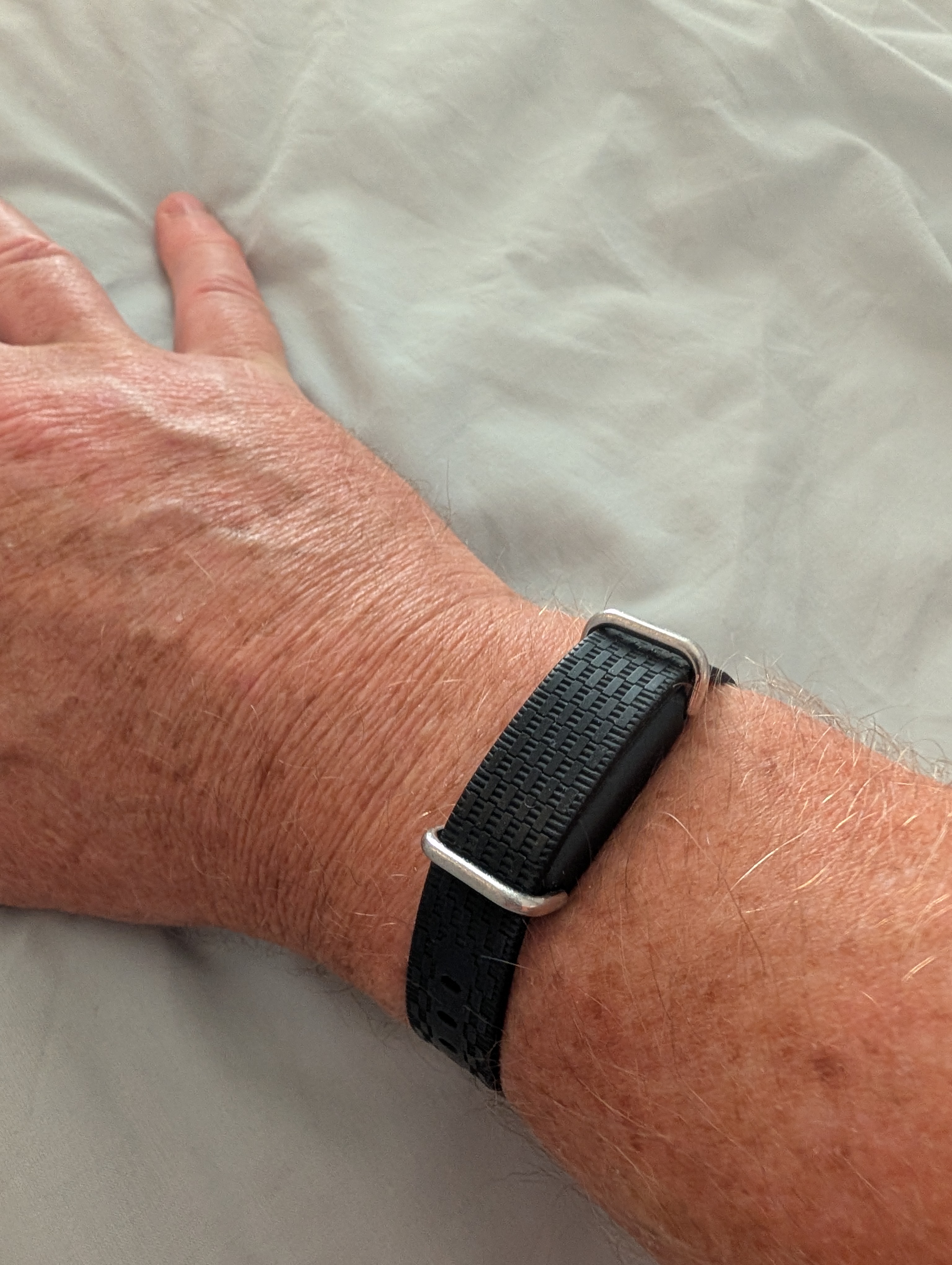
If you are already taking antihypertensive medication, dietary nitrate may produce an additive effect on blood pressure. This is not necessarily dangerous, but it is worth discussing with your GP before starting. If you are monitoring your own BP at home, a continuous monitor like the Hilo gives you far more data points than an occasional cuff reading, which matters when you are looking for a small signal in noisy data.
One practical note: dietary nitrate from beetroot causes beeturia in a significant proportion of people, meaning pink or red colouration of urine and sometimes stools. This is harmless. It is caused by betalain pigments, not the nitrate itself. It will alarm you the first time if no one warned you.
The supplement industry problem
The research on dietary nitrate is real and the supplement industry has noticed. The result is a category of products that cite genuine science to sell products that do not replicate the conditions of that science.
The specific patterns to watch for: products that do not disclose nitrate content per serving; products that claim proprietary extraction processes make them more bioavailable than standardised alternatives (there is no evidence base for this); testimonials from named individuals claiming specific mmHg reductions within specific timeframes.
The clinical trials show mean reductions of 3-5 mmHg across populations. An individual testimonial claiming a reduction from 148/94 to 122/79 in 60 days is not evidence of the product working. It is a number that could reflect regression to the mean, lifestyle changes, medication adjustment, measurement error, or fabrication. The existence of real science in this area does not validate testimonials that exceed what the science shows.
A live trial using this evidence base
I am currently running a pre-registered 30-day n=1 trial of Beet It Sport Nitrate 400 for blood pressure, using a Hilo continuous BP monitor as the measurement instrument. The protocol, including the pre-specified hypothesis, baseline values, analysis plan and verdict criteria, was published before Day 1.
The launch post is here and the pre-registration protocol is here. Results follow approximately 24 July 2026. If you want to understand how I am measuring and tracking BP as part of a broader health picture, the joined-up health data post covers that in detail, and there is a practical how-to guide for building your own health dashboard if you want to do something similar.
The trial does not prove anything about dietary nitrate generally. It is one person’s data, with acknowledged confounders, using a single measurement instrument. What it does is apply this evidence base honestly to a real situation and report what happens without moving the goalposts.
I publish the ones that fail too
The trial described above is finished and the answer was no change at all. You can read the full results here. I set the threshold before I started and published it either way. Subscribe and I will send you the next thing I test, working or not.
I’m Pete Harrison. I’m 55, I run a business, and I have a mild case of insomnia that means I spend a lot of time at 3am reading about gadgets, gear and ways to make life work better. Things I Learnt at 3am is where I write honestly about the things I’ve actually bought, tested and lived with. No fluff, no rehashing the spec sheet. Just the real verdict from someone who uses this stuff every day.