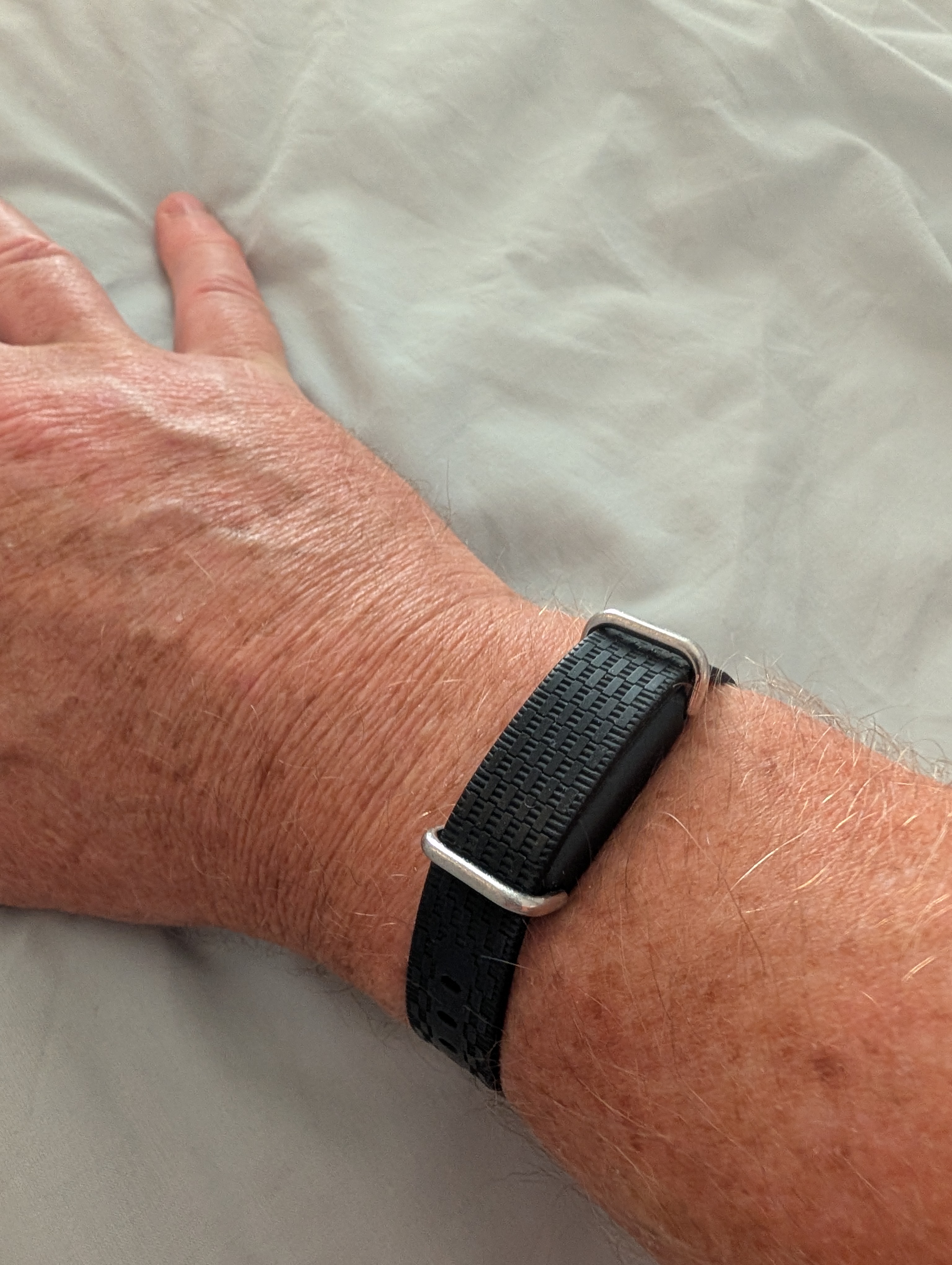
This is my Hilo blood pressure monitor review, written after two years of wearing it every single day. I have had high blood pressure since 2005. That is twenty years of it sitting at the back of my mind, of GP appointments, of trying things that did not work, and of a lot of 3am reading trying to understand why my numbers would not come down. I have read the books, tried the supplements, been on four different medications at once, and spent more evenings than I can count down research rabbit holes wondering whether it was salt, stress, sleep, or just bad luck.
The Omron X7 upper arm cuff was my first serious piece of kit. It is genuinely excellent as a cuff monitor goes, and if you need a reliable home blood pressure monitor I would not argue with it. But the problem with a cuff monitor is the same as the problem with a bathroom scale. It only tells you what is happening at one moment in time, and only if you actually remember to use it. I am not great at either of those things.
What I wanted was something I could wear all day that would tell me what my blood pressure was actually doing across a normal life. Exercise, sleep, stress, that second glass of red wine on a Friday. Not a snapshot. A picture.
The problem with wearable blood pressure monitors
Most of them are enormous. If you look at the wrist-based BP monitors that were available a couple of years ago, they looked like something you would wear to measure your tyre pressure. Fine for occasional use at a desk, less fine if you sail, climb or run and need something that does not get in the way or look ridiculous.
Then I found the Aktiia. It has since been rebranded as the Hilo, but it is the same device with a better app. Small, slim, looks like a regular fitness band. Waterproof. FDA cleared. It measures blood pressure continuously using optical sensors rather than a cuff, taking readings throughout the day and night without you doing anything. That last bit matters more than it sounds.
The Amazon reviews at the time were mixed, which gave me pause. But the waterproof thing was a dealbreaker in the other direction. I sail a Nacra Inter 20 catamaran and I climb indoors. I do not want to be fussing with a watch every time I get in the water. So I took a punt.
That was two years ago. I still wear it every day.

What it actually tells you
The app shows you time in target range, your average systolic and diastolic readings across different periods, and how your numbers change day to day. The screenshots I have included show my current data. My 7 day average is sitting at 130/82, which the app correctly categorises as elevated. My 6 month time in target range is 37 percent. Not where I want to be.
But here is the useful bit. I know exactly why. I have had a knee injury that has kept me off running for a few weeks. My weight has crept up, my fitness has dropped, and both of those things show up in the numbers. I later wired the Hilo data together with my Garmin and Hume scales and let Claude analyse the lot. What it found about the knee injury and my blood pressure was one of those moments where data tells you something you had been wondering about for months.
And that is the point of this device. Not that it makes your blood pressure better by itself. It gives you the feedback loop that was missing. Before the Hilo, I had a rough sense that exercise probably helped and cheese probably did not. Now I know it. I can see what a week of good running does to my readings versus a week on the sofa. I can see what happens after a night out. I can see that stopping eating cheese every day made a meaningful difference to my numbers, which I think is about the sodium content, though a book I found useful on this subject has a different theory about it being the sodium to potassium balance rather than sodium alone.
If you want to understand that side of it, The High Blood Pressure Solution is the best thing I have read on the subject. Not medical advice, just genuinely useful background for understanding what is going on.
On the potassium note: I have started having a banana every day again. Not a cure, not medical advice, but the sodium to potassium ratio argument made enough sense to me that I tried it, and my numbers have historically been better when I am consistent with it. Read the book and make your own mind up.

The medication story
I am not going to tell you what to take or not take. But I will tell you that at my worst I was on four medications simultaneously: lercanidipine, ramipril, bisoprolol and spironolactone. The bisoprolol was causing bradycardia, which meant my heart rate was too slow for my activity level. The spironolactone had diuretic effects that were genuinely incompatible with being active. I will leave it at that, except to say that having to stop a run to find a bush is not ideal when you are trying to get your numbers down through exercise.
With a lot of 3am reading, and with some help from Gemini to help me structure my thoughts before GP appointments, I worked through the medications one by one with my doctor and got down to lercanidipine and ramipril, which is where I am now. The Hilo data was part of those conversations. Being able to show a GP a six month trend rather than a single clinic reading changes the conversation.
None of this is medical advice. Talk to your GP. But continuous data is more useful than a cuff reading taken while you are already anxious about having a cuff reading taken.
The practical reality after two years
A few things worth knowing before you buy.
You need to calibrate it once a month using a standard upper arm cuff, which is included in the box. It takes about five minutes and is not a big deal, but it is a recurring task. Set a reminder and it becomes habit.
The strap does wear out. I bought a replacement after about 22 months, which cost around thirty pounds. Not nothing, but it is a consumable on a medical grade device and I did not find it unreasonable.
It is waterproof. Genuinely waterproof, not splash resistant. I sail, I sweat, I climb. It has not given me a moment of trouble with water.
The app has improved a lot since the Aktiia days. The rebranded Hilo app is cleaner, the insights are more useful, and the time in target range view in particular is something I check regularly.
It does not replace a cuff for one-off clinical readings. If your GP needs a number for your notes, use a cuff. What the Hilo gives you is the picture around that number, which a cuff cannot.

Hilo blood pressure monitor review verdict: would I buy it again?
Yes, without hesitation. Two years in, still wearing it every day. It did not fix my blood pressure. Nothing fixes blood pressure like a tablet or a lifestyle change fixes blood pressure. But it gave me the information I needed to understand what was happening and to have better conversations with my doctor about it.
If you have hypertension, or if you suspect you might, or if you are just the kind of person who wakes up at 3am wanting to understand their own body better, this is the most useful piece of kit I own. More useful than any supplement I tried. More useful than any single book. Because it shows you your own data, and your own data is the only data that actually matters. If you wear a Garmin Fenix, the two work well together as part of the same daily health picture.
Also mentioned in this review: the Omron X7 cuff I used before, and The High Blood Pressure Solution.
This post contains affiliate links. If you buy through them I may earn a small commission, at no extra cost to you.
I used the Hilo to run a pre-registered beetroot trial for blood pressure, and it is now finished. The answer was no change at all, across 824 readings. You can read the full results here, along with the protocol I set before I started.
I publish the ones that fail too
The beetroot trial is finished and the answer was no change at all. I set the threshold before I started and published it either way. Subscribe and I will send you the next thing I test, working or not.

Pete Harrison
I’m Pete Harrison. I’m 55, I run a business, and I have a mild case of insomnia that means I spend a lot of time at 3am reading about gadgets, gear and ways to make life work better. Things I Learnt at 3am is where I write honestly about the things I’ve actually bought, tested and lived with. No fluff, no rehashing the spec sheet. Just the real verdict from someone who uses this stuff every day.
Leave a Reply