Tag: over 50

  • My Blood Pressure Is Finally Easing, and the Running Data Called It First

    My Blood Pressure Is Finally Easing, and the Running Data Called It First

    Disclosure: there are affiliate links below, to the Garmin Fenix 8 and to Beet It Sport. I bought both with my own money. If you buy through a link I might earn a small commission, which costs you nothing and does not change what I write.

    It is 3am and I am cross-referencing a Garmin export against a Hilo blood pressure report. That sentence tells you most of what you need to know about how I spend the small hours. The monthly data dump landed today: two exports, two devices, one middle-aged body, thirteen months of history sitting in a spreadsheet. And for the first time since I did my knee last December, the lines are pointing the right way. The clearest of them is a fortnight of heat acclimation running that took ninety seconds a kilometre off my usual loop.

    This is an interim report, not a victory lap. I am still heavier, slower and higher-pressured than I was in the summer of 2025. But something turned a corner in the last two weeks, and the receipts are clear enough that I am allowed to be quietly pleased. So I am going to be.

    The run that felt like proof I was done

    On 26 June I ran my usual loop around Flintshire, roughly eight kilometres, the same route I have plodded a hundred times. It took me 9:36 per kilometre. That is not a running pace. That is a brisk-shuffle-with-opinions pace. My average heart rate was 142 and it felt like 180. It was the peak of the hot spell, and I finished it genuinely wondering whether the knee injury had quietly ended me as a runner: six months on and still going backwards.

    Here is what the export showed me at 3am. It hadn’t. That run was the bottom, not the trend.

    Heat acclimation running: the fortnight in receipts

    Same loop, same distance, tracked on the same watch. Here is the whole arc.

    DatePace (min/km)Avg HRMax HRWhat happened
    22 Jun8:56137170Pre-heat baseline
    24 Jun8:58141160Heat building
    26 Jun9:36142159Worst day, peak-heat struggle
    27 Jun9:17133146Capped and walked, on 4.3 h sleep
    29 Jun8:07139160Turnaround, after 7.2 h sleep and a rest day
    30 Jun8:42131149Efficiency landed, fastest for the heart rate
    1 Jul8:04145175Fastest, pushing hard by choice

    Read down the pace column, then read it again. From the 26 June low to 1 July I took roughly ninety seconds per kilometre off the same route, at a similar or lower heart rate. On a hilly eight-kilometre loop that is not a rounding error. That is the engine coming back.

    The run I keep looking at is 30 June: 8:42 per kilometre at an average heart rate of 131. That was the lowest-HR run of the entire block, and one of the quickest. Same output, less cost. If you want the single clearest fingerprint of aerobic fitness returning, that is it.

    By 1 July I ran 8:04, my fastest of the fortnight, and the difference was that I was pushing hard because I chose to, not shuffling because the heat was forcing me to. None of this is mysterious. It is textbook heat acclimation running, landing right on schedule at about day seven to ten.

    Why the heat wrecks a run at a heart rate that should feel easy

    When it is hot, your body has a problem of allocation. Running muscle wants blood for oxygen. Your skin wants blood at the surface to shed heat. Both are non-negotiable, and there is only so much blood to go round, so the two compete.

    To cover the shortfall the heart simply beats faster for the same effort, which is the cardiac drift you feel as a steady run quietly turning into a grind. On top of that you sweat out plasma, so the actual volume of fluid the heart is pumping shrinks, and a smaller stroke volume means an even higher heart rate to move the same oxygen. That is why 26 June cost me 142 beats a minute to travel slower than a walk.

    Acclimation fixes the plumbing. Over a week or so of heat exposure the body expands plasma volume, you start sweating earlier and more efficiently, and the cooling system stops stealing quite so much from the running. Same weather, less tax. The fortnight above is that adaptation happening in real time, written down. This is exactly the sort of thing you cannot feel reliably from the inside. On 1 July I felt strong, but I have also felt strong on runs the data later called mediocre. The watch keeps me honest.

    The overnight numbers, and why two devices matter

    The runs are the vivid part. The overnight data is the part I actually trust, because it comes from two devices that have never spoken to each other.

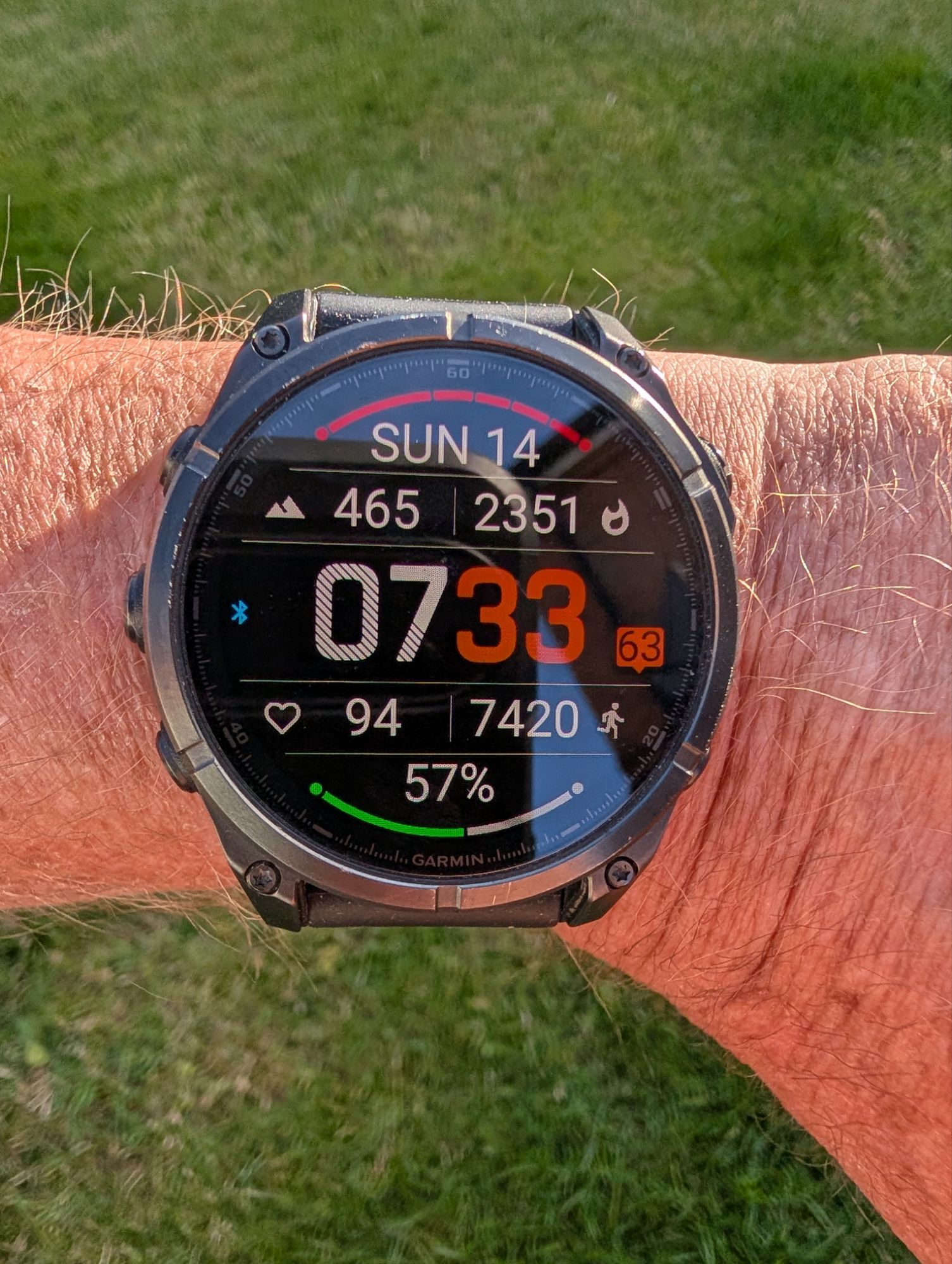
    My seven-day HRV average on the Garmin Fenix 8 climbed from 41 to 65 milliseconds across the fortnight, the highest I have ever recorded. Resting heart rate fell from 58 to 52 over thirteen days. That alone would be encouraging, but easy to dismiss as one gadget flattering me.

    So here is the cross-check. The Hilo, measuring at night by a completely different method, put my night-time heart rate at 51 to 56 in late June. Two independent devices, two different sensors, landing on the same recovering body at around 52 beats a minute. That agreement is the whole reason I bother measuring any of this. One device is a story. Two devices that agree is closer to evidence, though it is still a sample size of one man who cannot sleep.

    A caveat on the Garmin, because honesty is the entire point of this blog. It reads heart rate from the wrist optically, and a few of my maximum figures this month look wrong. A 189 on a long run on 20 June, plus a 177 and a 175, are almost certainly cadence-lock artefacts: the watch mistaking footstrike for pulse. I have flagged them for a cardiology review I have coming up, and a chest strap would settle the true peak.

    Read the wrist optical max HR with suspicion. Read the overnight resting trends with more confidence. The watch doing all of this is the Garmin Fenix 8. Mine is a specific DLC Sapphire variant that is genuinely hard to find in stock, so here is the standard Fenix 8, which does everything described above.

    A word on the beetroot, before anyone asks

    Partway through all this I started a proper little trial on beetroot: one shot of Beet It Sport a day, to see whether dietary nitrate does anything measurable to my blood pressure. I want to be completely clear, because this matters. It is far too early to say anything at all. The trial only just began, I am still locking the baseline, and none of the fitness improvement above should be pinned on it.

    I am flagging it now rather than have anyone assume later that the beetroot did the heavy lifting. It didn’t. The running did. The beetroot is a separate question, with its own pre-registered experiment and its own reading of the evidence, and I will answer it with data when I have it. Not before.

    The bigger picture: reversing a cascade

    Long-time readers will know the shape of this. Last December I did my knee. Less running led to weight gain led to higher blood pressure: a slow run of dominoes I only spotted because I had the joined-up data to see it. This fortnight is the first real evidence of the dominoes falling back the other way. Rebuild the aerobic engine and the rest is supposed to follow.

    Supposed to. The body-composition side is still lagging badly. I weighed 97.7 kilograms this month, the highest of the whole series, and the scales are not moving yet. VO2max is holding at 39 to 40, which at least means no further de-training, but it is not climbing either. Fitness is a faster-moving needle than weight, and weight is a faster-moving needle than the thing I actually care about, which is the pressure in my arteries.

    The blood pressure, honestly

    Which brings me to the number I really wanted from this dump. June daytime resting blood pressure came in at 133 over 85, averaged from something like 640 automatic Hilo readings. That 133 is the lowest daytime systolic of the entire post-injury plateau. Since December the number has sat stubbornly in a 134 to 137 band, month after month, and June is the first time it has dropped below it. After six months of a flat line, that genuinely made my week.

    Now the discipline, because this is where people oversell. It is easing off the plateau, not a return to baseline. My fit-summer-2025 self sat around 121 to 130, and I am not there.

    And here is the caveat that matters most. The June report’s data window closed on 26 June, which is the exact day of my worst run, before the late-June surge had consolidated. In other words, the best fortnight of running I have had in half a year is barely represented in this month’s blood pressure at all. The easing is real, but it is mostly pre-improvement. The payoff from the surge, if it comes, has not shown up yet.

    One more honesty note on the Hilo, since it is cuffless and people are rightly sceptical of that. You read the monthly means, not single readings. There is a lone 166 over 104 sitting in the June data from a hot run-day evening, and it is a transient, not the signal. Ignore the spikes. Watch the average of hundreds of readings move.

    July is the real test

    That is the honest cliffhanger. Blood pressure lags fitness. The fitness turned the corner in the last week of June, and the report that will actually capture it does not exist yet.

    It arrives at the end of July, and it will either confirm that the recovering engine drags resting pressure down with it, or it will tell me the relationship is messier than my tidy cascade story would like. Either way I will write it up, because a number you only report when it flatters you is not a measurement. It is marketing.

    My weakest lever, meanwhile, is not running or diet. It is sleep. I averaged 5.9 hours a night in June, under six even in my best-HRV week, which is faintly ridiculous given how much of this data I gather at 3am. If I fixed the sleep I suspect everything else would move faster. That is the next thing to chip at.

    So: an interim report. Two weeks of heat acclimation running, and the engine is coming back. Two devices that have never met agree the recovery is real, the blood pressure has finally cracked off its plateau, and I am pleased. Cautiously, provisionally, with a July report hanging over me. But pleased.

    This is the whole case for measuring your own metrics, by the way. Not the gadgets, and not the graphs for their own sake. It is that when something finally starts working, you can see it in numbers before you can feel it. And when it isn’t working, you find out early enough to do something about it.


    About the author

    I’m Pete Harrison. I’m 55, I run a business, and I have a mild case of insomnia that means I spend a lot of time at 3am reading about gadgets, gear and ways to make life work better. Things I Learnt at 3am is where I write honestly about the things I’ve actually bought, tested and lived with. No fluff, no rehashing the spec sheet. Just the real verdict, and the real numbers, from someone who uses this stuff every day.

  • Dietary Nitrate and Blood Pressure: What the Research Actually Shows

    Dietary Nitrate and Blood Pressure: What the Research Actually Shows

    This page is a reference summary of the published research on dietary nitrate and blood pressure. It is not medical advice. If your blood pressure is elevated, talk to your GP. I am a layperson who reads a lot at 3am.

    Last reviewed: June 2026.

    Affiliate disclosure: this page contains affiliate links, including to the Beet It shot and the Hilo monitor I use. I bought both with my own money. All views are my own.

    The link between dietary nitrate blood pressure reduction is real, reasonably well supported by clinical evidence, and almost always misused by the supplement industry to sell you something that doesn’t work. This page tries to separate those two things.

    What dietary nitrate is and how it works

    Dietary nitrate is an inorganic compound found in high concentrations in certain vegetables, principally leafy greens and root vegetables. Spinach, rocket, beetroot, and celery are the richest sources. It is not the same as the nitrates used as preservatives in processed meat, though the chemistry is related.

    The mechanism is straightforward and well understood. Dietary nitrate (NO3) is absorbed in the small intestine and concentrated in saliva. Bacteria on the tongue and in the mouth convert it to nitrite (NO2). In the stomach and bloodstream, nitrite is converted to nitric oxide (NO). Nitric oxide relaxes and widens the smooth muscle in blood vessel walls, reducing peripheral vascular resistance and therefore reducing blood pressure.

    This is not speculative biochemistry. It is the same fundamental mechanism exploited by glyceryl trinitrate (GTN spray), which has been used in cardiology for angina since the 1870s. The dietary route is slower and more sustained than the pharmaceutical route, but the underlying chemistry is the same.

    What the research shows on dietary nitrate blood pressure effects

    The clinical evidence for dietary nitrate and blood pressure is reasonably robust for a nutritional intervention. That is a deliberately cautious framing: it is not as strong as the evidence for antihypertensive medication, but it is substantially stronger than the evidence for most supplements.

    A 2013 Cochrane systematic review examined 16 randomised controlled trials of inorganic nitrate or nitrate-rich foods in adults. It found a mean reduction in systolic blood pressure of approximately 4.4 mmHg and diastolic of approximately 1.1 mmHg. Effect sizes were larger in studies using higher doses and in participants with elevated BP at baseline.

    A 2017 meta-analysis published in the Journal of Nutrition (Siervo et al.) covering 22 randomised trials found mean systolic reductions of 3.55 mmHg and diastolic reductions of 1.32 mmHg in healthy adults. In participants with hypertension at baseline, effect sizes were consistently at the higher end.

    A 2022 meta-analysis in Nutrients covering 43 trials found consistent systolic reductions in the 3-5 mmHg range across populations, with larger effects in older adults and those with higher baseline BP.

    A 3-5 mmHg reduction in systolic BP sounds small. It is not trivial. Population-level modelling suggests a sustained 2 mmHg reduction in mean systolic BP would reduce stroke mortality by around 10% and coronary heart disease mortality by around 7%. These are meaningful numbers at scale. For an individual, the clinical significance depends entirely on where your BP starts.

    The honest limitations: most trials are short, the majority running for two weeks or less. Evidence for sustained effects beyond 4-6 weeks in free-living populations is limited. Almost all trials are conducted under controlled conditions that are difficult to replicate in daily life. Effect sizes in trials tend to be larger than effects observed in real-world use. The evidence is stronger for acute effects than for sustained long-term reduction.

    The dose question

    This is where most dietary nitrate supplements fail, and where the marketing becomes actively misleading.

    The trials showing meaningful BP reductions consistently used doses in the range of 300-500 mg of dietary nitrate per day, with 400 mg being the most commonly cited threshold. To hit 400 mg from food alone requires approximately 200-250g of fresh spinach, a large bunch of rocket (roughly 150g), two medium beetroots (roughly 300g raw weight), or around 150g of celery.

    Most commercial beetroot supplements, gummies, powders and capsules do not disclose their nitrate content. Those that do frequently contain 50-100 mg per serving, which is 25-50% of the threshold dose used in the research. A supplement that does not disclose its nitrate content cannot be evaluated against the evidence base and should be treated with scepticism.

    The products used most frequently in the published research are standardised beetroot juice shots that guarantee a specific nitrate content per serving. The Beet It Sport Nitrate 400 shot (James White Drinks) is the most commonly used in UK academic research, delivering 400 mg dietary nitrate per 70 ml shot with Informed-Sport certification.

    The mouthwash problem

    This is the most practically important point on this page and the one most consistently omitted by supplement marketing.

    The dietary nitrate mechanism depends entirely on oral bacteria. If you kill those bacteria, you eliminate most or all of the blood pressure effect.

    Antibacterial mouthwashes containing chlorhexidine, and to a lesser extent cetylpyridinium chloride, kill the oral bacteria responsible for converting nitrate to nitrite. A 2013 study by Govoni et al. found that chlorhexidine mouthwash used twice daily reduced the blood pressure effect of dietary nitrate by approximately 90%. A 2019 study by Woessner et al. confirmed that antiseptic mouthwash substantially attenuated the nitric oxide response to nitrate supplementation.

    The practical implication: if you are using antibacterial mouthwash while taking dietary nitrate supplements, you are likely wasting your money. Standard fluoride toothpaste does not have this effect. The problem is specific to antibacterial mouthwash.

    Who should not use dietary nitrate

    If you take any medication containing organic nitrates for heart conditions or chest pain, including glyceryl trinitrate (GTN spray), isosorbide mononitrate, or isosorbide dinitrate, do not combine with dietary nitrate supplementation without medical advice. The combination can produce an additive vasodilatory effect and cause a dangerous drop in blood pressure.

    If you take phosphodiesterase-5 inhibitors for erectile dysfunction or pulmonary hypertension, including sildenafil (Viagra), tadalafil (Cialis), or vardenafil (Levitra), do not combine with dietary nitrate. The interaction can cause a severe, potentially dangerous drop in blood pressure.

    If you are already taking antihypertensive medication, dietary nitrate may produce an additive effect on blood pressure. This is not necessarily dangerous, but it is worth discussing with your GP before starting. If you are monitoring your own BP at home, a continuous monitor like the Hilo gives you far more data points than an occasional cuff reading, which matters when you are looking for a small signal in noisy data.

    One practical note: dietary nitrate from beetroot causes beeturia in a significant proportion of people, meaning pink or red colouration of urine and sometimes stools. This is harmless. It is caused by betalain pigments, not the nitrate itself. It will alarm you the first time if no one warned you.

    The supplement industry problem

    The research on dietary nitrate is real and the supplement industry has noticed. The result is a category of products that cite genuine science to sell products that do not replicate the conditions of that science.

    The specific patterns to watch for: products that do not disclose nitrate content per serving; products that claim proprietary extraction processes make them more bioavailable than standardised alternatives (there is no evidence base for this); testimonials from named individuals claiming specific mmHg reductions within specific timeframes.

    The clinical trials show mean reductions of 3-5 mmHg across populations. An individual testimonial claiming a reduction from 148/94 to 122/79 in 60 days is not evidence of the product working. It is a number that could reflect regression to the mean, lifestyle changes, medication adjustment, measurement error, or fabrication. The existence of real science in this area does not validate testimonials that exceed what the science shows.

    A live trial using this evidence base

    I am currently running a pre-registered 30-day n=1 trial of Beet It Sport Nitrate 400 for blood pressure, using a Hilo continuous BP monitor as the measurement instrument. The protocol, including the pre-specified hypothesis, baseline values, analysis plan and verdict criteria, was published before Day 1.

    The launch post is here and the pre-registration protocol is here. Results follow approximately 24 July 2026. If you want to understand how I am measuring and tracking BP as part of a broader health picture, the joined-up health data post covers that in detail, and there is a practical how-to guide for building your own health dashboard if you want to do something similar.

    The trial does not prove anything about dietary nitrate generally. It is one person’s data, with acknowledged confounders, using a single measurement instrument. What it does is apply this evidence base honestly to a real situation and report what happens without moving the goalposts.


    I’m Pete Harrison. I’m 55, I run a business, and I have a mild case of insomnia that means I spend a lot of time at 3am reading about gadgets, gear and ways to make life work better. Things I Learnt at 3am is where I write honestly about the things I’ve actually bought, tested and lived with. No fluff, no rehashing the spec sheet. Just the real verdict from someone who uses this stuff every day.

  • I’m Testing Beetroot for Blood Pressure. Here’s Exactly What I’m Trying to Prove, Before I Start.

    I’m Testing Beetroot for Blood Pressure. Here’s Exactly What I’m Trying to Prove, Before I Start.

    Bought with my own money. No commercial relationship with Beet It or James White Drinks. This post contains affiliate links, including to the beetroot shot I’m using and the Hilo monitor I measure with.

    It was 3am and I was reading about beetroot. Not for the first time. But this time I’d actually ordered some to run a proper beetroot blood pressure trial, and I had that specific low-level anxiety you get when you’ve committed money to testing a claim and you’re not entirely sure you’ll be honest with yourself about what you find.

    The anxiety is the point. I know how this goes. You try something, your numbers improve, you decide it worked. Maybe it did. Maybe you were sleeping better that week. Maybe you’d been less stressed, or done more steps, or eaten less salt. Maybe the beetroot did absolutely nothing and you just got lucky with the timing. You’ll never know, because you didn’t decide in advance what “worked” would actually look like.

    So this page exists to stop me doing that. This is the pre-registered protocol for a beetroot blood pressure trial: the hypothesis, the baseline, and exactly what I’ll count as a result — all written before Day 1. I can’t change any of it once the trial starts. If I do, I’ll say so.

    The launch post explaining why I’m doing this is here, if you want the story before the protocol.

    The beetroot blood pressure trial hypothesis

    One Beet It Sport Nitrate 400 shot every morning for 30 days will reduce my mean daytime systolic blood pressure by 3 mmHg or more, compared to my June 2026 baseline.

    Three millimetres of mercury. That threshold comes from the published literature: it’s around the lower end of what the trials show for dietary nitrate in people with elevated BP. Anything smaller than that and I can’t distinguish signal from the natural day-to-day variation in my readings. If you want the full breakdown of the studies and their effect sizes, I’ve written it up on the dietary nitrate evidence summary page.

    The baseline

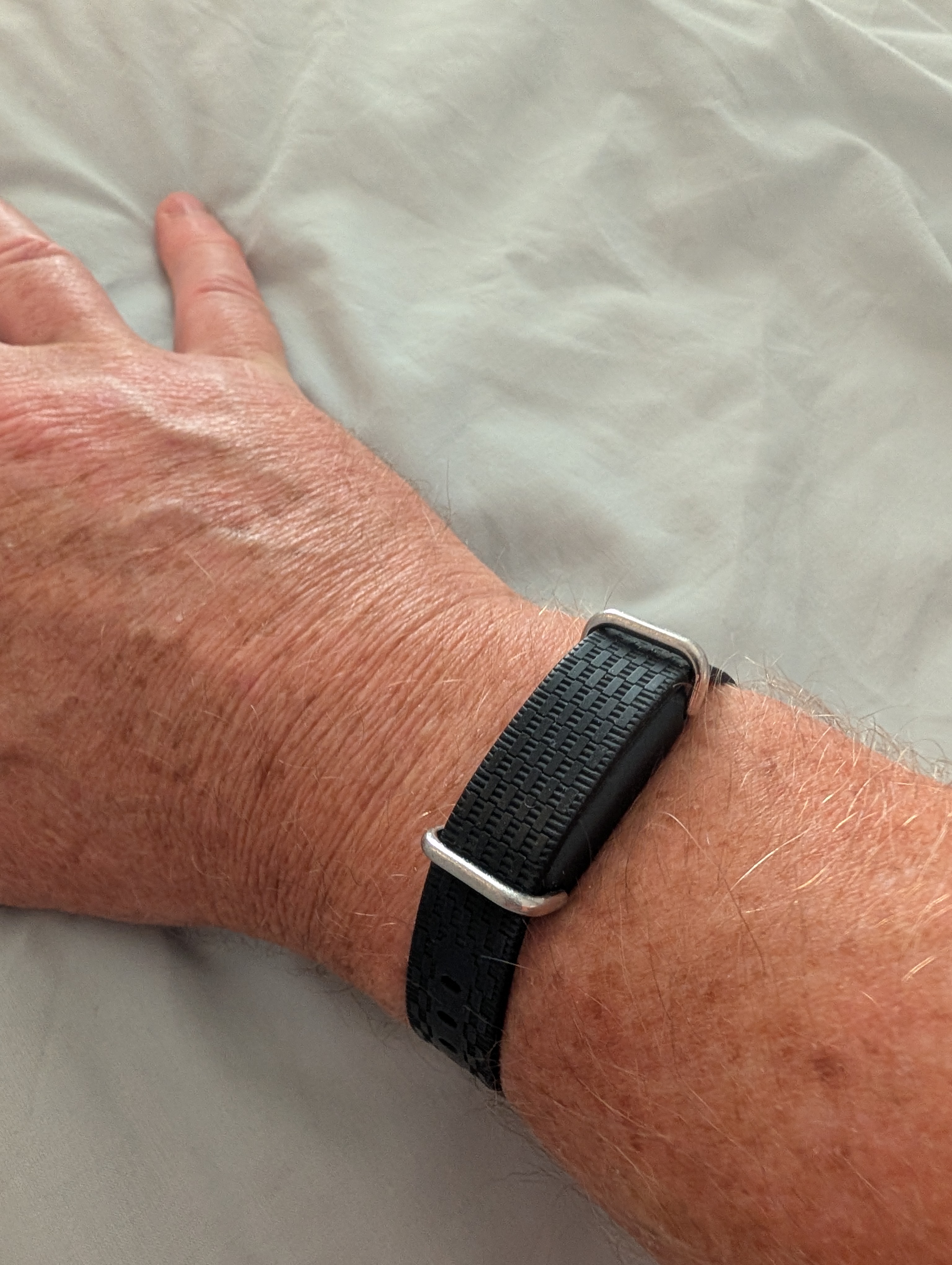
    I’ve been wearing a Hilo continuous blood pressure monitor every day since 2022. It’s a Class IIa medical device, clinically validated, not a consumer fitness tracker pretending to measure BP. It takes readings through the day and night using optical sensors and gives me a running picture of what my blood pressure is actually doing, rather than a single clinic reading taken while I’m already tense about being in a clinic. Full review here.

    My baseline for this trial is the June 2026 Hilo monthly report. That’s the month immediately before the trial starts, and the most recent stable period I have before I introduce any intervention.

    MetricValue
    Mean daytime systolic133 mmHg
    Mean daytime diastolic85 mmHg
    Mean daytime HR73 bpm
    Daytime systolic SD3 mmHg
    Daytime readings400

    The standard deviation of 3 mmHg matters. It means my baseline is actually quite tight: 400 readings clustering closely around 133. So a genuine 3 mmHg signal would have to emerge through a distribution that doesn’t have much give in it. That’s either good (the threshold is meaningful) or bad (the noise will drown any real effect). Either way, it’s what the data shows, and I’m not adjusting the threshold to make it easier.

    One limitation I’m stating upfront: I don’t have a clinical upper-arm cuff for weekly cross-checks during this trial. The Hilo is consistent and validated, but it produces trend-grade values rather than absolute gold-standard readings. It’s the right tool for tracking change within a person over time, which is exactly what I’m using it for. I’ll be honest about that ceiling in the results post.

    The intervention

    Beet It Sport Nitrate 400. One 70ml shot every morning for 30 days, starting 25 June 2026. Same time each morning, with food. Informed-Sport certified, 400mg dietary nitrate per shot, which is the dose the actual research uses.

    One specific rule worth knowing about: no antibacterial mouthwash during the trial. The nitrate mechanism depends on oral bacteria converting nitrate to nitrite in your mouth before your body can use it. Chlorhexidine mouthwash kills those bacteria, and there’s good evidence that it can knock out most of the BP effect on its own. I’m not using mouthwash. I’m telling you this because it’s one of those things the supplement ads never mention, even though it’s in the same literature they’re citing to sell you the product.

    The washout

    After Day 30, I stop the shots and monitor for another 14 days. If BP drifts back toward 133 during that window, it strengthens the case that the intervention was doing something. If it stays low, that weakens it. Either way I’m reporting what happens, not what I was hoping for.

    The analysis

    Three comparisons: intervention mean versus baseline, washout mean versus baseline, washout mean versus intervention. Shown as a time series with the three phases marked. Effect reported as a plain mmHg difference. No p-values: with one person’s autocorrelated daily data, a p-value would produce false confidence and I’d rather just say what happened.

    What I’ll count as a result

    Signal: Mean daytime systolic during intervention is 3 mmHg or more below baseline. That means 130 mmHg or lower.

    Null: Mean daytime systolic is less than 3 mmHg below baseline. Beetroot probably didn’t do what the science suggests it should.

    Inconclusive: Something changed but I can’t separate the beetroot from everything else that was changing at the same time. This is the most likely outcome, and I’ll say so plainly if it happens.

    These definitions are locked from Day 1. I can’t look at the results and then decide what the threshold should have been.

    The confounders I’m already aware of

    This is the honest problem with this experiment, and I’m putting it here rather than at the end because it matters.

    During these same 30 days I’m rebuilding aerobic fitness after a knee injury. More exercise lowers blood pressure. I’m also trying to sleep longer than my current short average. Better sleep lowers blood pressure. My body composition is changing. That affects blood pressure too. Any improvement I see during the trial could come from any of those things, or some combination of all of them, with beetroot contributing nothing at all.

    I’m keeping a daily confounder log for exactly this reason. It won’t make attribution clean. But it means the results post will at least be honest about what else was moving.

    Pre-registration published 25 June 2026. Results to follow approximately 24 July 2026 (end of intervention) and 7 August 2026 (end of washout).


    I’m Pete Harrison. I’m 55, I run a business, and I have a mild case of insomnia that means I spend a lot of time at 3am reading about gadgets, gear and ways to make life work better. Things I Learnt at 3am is where I write honestly about the things I’ve actually bought, tested and lived with. No fluff, no rehashing the spec sheet. Just the real verdict from someone who uses this stuff every day.

  • I Was Awake at 3am Reading a Supplement Ad. So I Designed an Experiment to Test It.

    I Was Awake at 3am Reading a Supplement Ad. So I Designed an Experiment to Test It.

    Affiliate disclosure: this post contains affiliate links, including to the beetroot shot I’m using in this trial and the Hilo monitor I measure with. I bought both with my own money. All views are my own.

    It was about 3am and I couldn’t sleep, which is not unusual. What was unusual was the thing I’d ended up reading. I’m not going to name it — naming it hands it search traffic — but it prompted me to design a proper beetroot blood pressure experiment of my own. Here’s why, and exactly what I’m testing.

    By the time I got to the part where she explained why cheap beetroot powder doesn’t work but this particular brand does, I was fairly sure I wasn’t reading a doctor’s confession. I was reading an advertisement.

    How I know it’s an advertisement (and why I still ran a beetroot blood pressure experiment)

    I’m not going to name the brand or the post. Naming it hands it search traffic, and the pattern matters more than this particular example anyway.

    A real doctor writing about their own health doesn’t funnel you to a checkout page via a /pages/listicle URL. Real clinical advice doesn’t come with manufactured scarcity or a money-back guarantee designed to lower your purchase anxiety. The emotional hooks in that post, the dead mother, the kitchen counter tears, the sudden revelation, are lifted almost verbatim from a template used across thousands of supplement advertorials. The character changes. The story doesn’t.

    None of which means the underlying science is wrong. That’s the clever part. The post gets one thing right: most beetroot powders and gummies are under-dosed on nitrate, often to the point of being essentially useless. That true fact is then used to sell a fake solution. The implicit argument is that you need this specific brand, not the cheaper validated alternative that the actual research used.

    The genuinely dangerous bit, buried under the emotional story, is the suggestion that you might manage your blood pressure without medication.

    What the science actually says

    The research on dietary nitrate and blood pressure is real. It’s not fringe. A 2013 Cochrane review covering 16 randomised controlled trials found a mean reduction in systolic BP of around 4-5 mmHg. A 2022 meta-analysis covering 43 trials found consistent reductions in the 3-5 mmHg range. I’ve written up the full evidence summary separately if you want the detail on studies, doses, and honest limitations.

    The mechanism is well understood. Dietary nitrate gets converted by bacteria in your mouth to nitrite, then in the stomach and bloodstream to nitric oxide. Nitric oxide relaxes and widens blood vessels, reducing peripheral resistance. This isn’t speculative. It’s the same mechanism as glyceryl trinitrate (GTN spray), which has been used in cardiology for over a century.

    The dose matters. The 400mg threshold used in most of the positive trials is the number to hit. You can get there from food: around 200-250g of spinach, a large bunch of rocket, or two medium beetroots. Or from a standardised supplement shot designed to hit that threshold reliably every time.

    The advertorial brand doesn’t disclose its nitrate content. The Beet It Sport Nitrate 400 shot I’m using does: 400mg per 70ml shot, Informed-Sport certified, used in a substantial chunk of the academic research on this subject.

    My situation

    I’m 55. I’ve had medicated hypertension since 2005, managed with lercanidipine and ramipril. My Hilo continuous monitor (full review here) gives me a daytime mean of 133/85 across 400 readings from June 2026. That’s borderline Stage 1 under current UK guidelines, above where I’d like to be, and trending in a direction I’ve been watching closely since a knee injury knocked out most of my training last autumn. I wrote about the connection between that injury and my blood pressure numbers here, if you want the longer story.

    I’m not looking for an alternative to medication. I’m looking for an adjunct that might help, if the science is real.

    Why I’m writing this before I start

    Because I know how easy it is to fool yourself. You try something, your numbers improve, you conclude it worked. Maybe it did. Maybe you happened to sleep better that week, or do more exercise, or drink less. You’ll never know, because you didn’t decide in advance what “worked” meant.

    So I’ve pre-registered the trial. The full protocol, including the hypothesis, the baseline numbers, the analysis plan, and exactly what I’ll count as a result, is published at the pre-registration page before Day 1. I can’t move the goalposts once I’ve seen the data. If I change anything, I’ll say so explicitly.

    I’m using a month’s supply of Beet It, one shot every morning. I bought it with my own money. I have no connection to James White Drinks.

    Why I probably still won’t be able to tell you if it worked

    Here’s the honest problem, and it’s the same problem that makes the cardiologist’s testimonial worthless.

    During these 30 days I’m also rebuilding aerobic fitness after that knee injury. More exercise lowers blood pressure. I’m trying to sleep longer than my current short average. Better sleep lowers blood pressure. My body composition is actively changing. All of these things independently affect BP, and all of them are happening at the same time as the beetroot.

    Even with 13 months of baseline data, a pre-registered protocol, and a validated measurement device, I will probably not be able to cleanly say the beetroot caused whatever I observe. I might see a signal consistent with the hypothesis. I might not. But I won’t be able to say with any confidence that the beetroot specifically did it.

    This is the actual point. If I, with all of this infrastructure, can’t establish causation, then a stranger on the internet with a before-and-after photo and a checkout link definitely can’t. The cardiologist story is not evidence. My experiment is barely evidence. The difference is that I’m telling you that upfront.

    What to do about your blood pressure in the meantime

    Talk to your GP. That’s not a liability disclaimer. It’s the correct advice. Dietary nitrate is an adjunct at best. At borderline Stage 1, the right first move is a clinical conversation, not a supplement.

    A few things worth knowing if you’re considering this yourself. If you’re on antihypertensive medication, dietary nitrate could have an additive effect on blood pressure, so tell your GP before you start. If you take any medication containing nitrates, whether for erectile dysfunction or a heart condition, sildenafil, tadalafil, isosorbide mononitrate, GTN spray, do not combine them with dietary nitrate. The combination can cause a dangerous drop in blood pressure. And beetroot turns urine and sometimes stools pink or red. It’s harmless. But it will alarm you the first time if nobody warned you.

    What happens next

    Results post around 24 July, covering the full 30 days. Post-washout update around 7 August. If it does nothing, I’ll say so. If the confounders make the result unreadable, I’ll say that too.

    This post is not medical advice. I am a layperson experimenting on myself.


    I’m Pete Harrison. I’m 55, I run a business, and I have a mild case of insomnia that means I spend a lot of time at 3am reading about gadgets, gear and ways to make life work better. Things I Learnt at 3am is where I write honestly about the things I’ve actually bought, tested and lived with. No fluff, no rehashing the spec sheet. Just the real verdict from someone who uses this stuff every day.

  • Hoka Infini Hike TC Sandal Review: Three Weeks In and I May Never Wear Shoes Again

    Hoka Infini Hike TC Sandal Review: Three Weeks In and I May Never Wear Shoes Again

    This post contains affiliate links. If you buy through them I may earn a small commission, at no extra cost to you. I bought these sandals with my own money.

    It was about 3am and I was lying there in the middle of a heatwave thinking about my feet. Not my proudest moment. But I had spent twenty years buying walking sandals, getting blisters on my arches, and eventually binning the sandals because they smelt so bad I was embarrassed to take them off in company. I was convinced the problem was me. Too narrow a foot, too high an arch, whatever. Then I read about what Hoka had done with the Infini Hike TC, and I thought: fine, one more go.

    Three weeks later I am wearing these sandals for everything. Walking, driving, work, a heatwave that has made shoes feel like a punishment. And no blisters. And no smell. So here is what I have found out.

    Pete wearing Hoka Infini Hike TC sandals on grass, viewed from above showing the strap system

    Who are these aimed at?

    If you already wear Hoka running or hiking shoes and you have been waiting for a sandal that does not feel like a compromise, this is it. But more broadly they are aimed at anyone who wants a proper summer walking sandal that actually works for distances rather than just pottering around a campsite. The TC stands for Trail and Camp, which tells you what Hoka had in mind. Priced at around £115 in the UK, they sit at the upper end of the sandal market. Not an impulse buy, but not unreasonable for what they are.

    The fit: a note for narrow-footed people

    I normally take a UK 10 in most shoes, but like a lot of people I need a half size up in Hoka, Brooks and Merrell. A 10.5 is my size in all three, and the same holds here.

    One thing worth flagging. I have narrow feet and the Infini Hike TC runs wide. There are three adjustment points: a heel strap, a forefoot strap, and a side buckle on the instep. I had to take all three to the far end of their adjustment range to get my foot sitting where it needed to be. It works, but if you are also narrow-footed, know that you will be using every millimetre of that adjustment. If your feet are on the wider side, this sandal will feel like it was built for you from the first second.

    Hoka Infini Hike TC sandal flat lay showing the top strap system and Vibram Megagrip sole

    The blister problem: solved

    I have had blisters on my arches from every sandal I have owned. Teva, The North Face, Merrell. All of them, no matter how tight I did the straps. I always assumed it was the arch of my foot rubbing against the edge of the footbed.

    The Infini Hike TC uses something called Ariaprene for the straps. It is a spongy, neoprene-adjacent material that is soft against the skin rather than the hard webbing you get on most sandals. The straps do not dig in. They sit against your foot and flex with it rather than fighting it. After three weeks and several 3 to 5 mile walks including canal paths and fields, I have not had a single blister or even a hint of rubbing. For context, I would have had a blister inside the first mile in any of my old sandals.

    Close up side view of the Hoka Infini Hike TC sandal showing the HOKA branding and strap buckle system

    The smell problem: also solved, and in a rather good way

    Every sandal I have owned has eventually started to smell. Badly enough that I was deodorising them regularly and still giving them a wide berth. It is just what happens when a sandal gets warm and sweaty and has nowhere to breathe.

    Hoka has treated the Infini Hike TC with something called Life Natural anti-odour technology, which is infused with peppermint oil. Not synthetic fragrance. Actual peppermint oil working against the bacteria that cause the smell in the first place. Three weeks in, including wearing them through a heatwave every day, they still smell of absolutely nothing. I am genuinely amazed by this. It is the detail I did not know I needed.

    The technology, in plain English

    The midsole: Hoka cushioning in a sandal

    Hoka built its reputation on putting a serious amount of cushioning in running shoes when everyone else was going minimal. The Infini Hike TC brings that same thinking to a sandal. There are two layers of compression-moulded EVA foam under your foot, which is the same material you find in Hoka’s Clifton and Bondi running shoes. The result is that standing in these sandals feels noticeably softer than standing in most walking shoes, let alone other sandals.

    MetaRocker: the rocking sole

    Hoka’s MetaRocker is a curved sole geometry that rolls your foot forward through each stride rather than letting it slap flat. In running shoes it makes you feel like you are being propelled forward slightly. In a sandal it means a surprisingly smooth, efficient stride on longer walks. You feel it most when you are covering a few miles and your legs would normally start to get tired.

    The deep heel cup

    There is a pronounced scoop in the heel of the footbed that holds the back of your foot in place. This is a big part of why the sandal does not let your foot slide around. Your heel is locked into position, which means the rest of the foot has a stable reference point. It sounds like a small detail. It is not.

    J-Frame stability

    Hoka includes what they call J-Frame technology along the inner edge of the midsole. It is designed to prevent your foot rolling inward as you walk, without overcorrecting. If you overpronate at all, this is the kind of low-key support that makes a long walk in sandals much less tiring than it would otherwise be.

    Vibram Megagrip outsole

    The sole is Vibram Megagrip, which is the rubber compound that serious trail running shoes use. It has 3.5mm lugs for grip on loose or wet ground. On my canal walks it has been completely sure-footed even on slippery muddy sections. The other thing worth knowing: this outsole can be resoled by a Vibram-authorised cobbler when it eventually wears out. That is genuinely unusual. Most sandals are disposable. These are designed to be repaired and kept going, which at £115 is the right way to think about them.

    Hoka Infini Hike TC sandal on tarmac showing the side profile and midsole stack height

    Three weeks in: where I have worn them

    Canal towpaths, fields, streets, in the van, at work. This heatwave has made them my default footwear for everything short of a formal occasion. They are quick-drying too, which matters when you are walking near water or getting caught in a summer shower.

    The real test is coming in August. We are taking the Giottivan to Anglesey for two weeks and the sandals are coming with us. Rocky coastal paths, beaches, whatever the Welsh weather decides to throw at them. I will update this post after that trip with the full verdict on longer and rougher ground.

    Hoka Infini Hike TC review verdict

    I had spent twenty years assuming sandals were not for me. Too narrow a foot, too prone to blisters, resigned to binning them when they smelt bad enough. The Hoka Infini Hike TC has fixed all three of those problems in three weeks of use.

    The Ariaprene straps eliminate the arch rubbing that caused my blisters. The deep heel cup stops the foot sliding. The Life Natural peppermint oil treatment means they still smell of nothing after daily use through a heatwave. And the Hoka cushioning means they are more comfortable to walk in than most of my actual shoes.

    At £115 they are not cheap. But I am already thinking of them as a long-term piece of kit, and the resolvable Vibram sole means they can be repaired rather than replaced. If you have struggled with sandals for the same reasons I have, these are worth serious consideration.

    Hoka affiliate link coming once my programme is approved. For now, search Hoka Infini Hike TC and you will find them directly on the Hoka website.

    Update: they’ve since done a proper five-mile test on mixed terrain, see the Chester riverside walk for how they held up.


    About the author: I’m Pete Harrison. I’m 55, I run a business, and I have a mild case of insomnia that means I spend a lot of time at 3am reading about gadgets, gear and ways to make life work better. Things I Learnt at 3am is where I write honestly about the things I’ve actually bought, tested and lived with. No fluff, no rehashing the spec sheet. Just the real verdict from someone who uses this stuff every day.

  • Six North Wales Campervan Sites, Reviewed Honestly (One I’d Never Repeat)

    Six North Wales Campervan Sites, Reviewed Honestly (One I’d Never Repeat)

    No affiliate links in this one. Every site, pub and beach below was paid for with my own money, and the verdicts are exactly what I told Suzy in the van afterwards.

    It was about 3am and I was doing the maths on a tank of diesel. Not for any good reason. Just one of those nights where the brain will not switch off and a calculator feels like company. The number was not pretty. Which is roughly how I arrived at a decision that has shaped our whole first season in the Giottiline Giottivan 60T: stay close to home.

    We are lucky. Home is within an easy run of North Wales, so close-to-home still means mountains, coast, castles and some genuinely good pubs. Over six weekends between March and May we worked our way through six sites, most of them within an hour or so of the front door. Some were superb. One I will never repeat. Here is the honest account of all six, in the order we stayed at them, so you can copy the good ones and avoid my mistake.

    A note before we start. Along the way I also learnt a fair bit about actually living in the van. We ditched the sleeping bags we used to throw in the old VW Transporter and switched to a proper duvet, which made an absurd difference to how well we slept. We also worked out which board games are any good for two people in a small space without taking up half a cupboard. Both of those deserve their own write-up another time. For now, the sites.

    1. Rhuallt Country Park, Saint Asaph

    We started gently, with Suzy, at Rhuallt Country Park just off junction 29 of the A55. It is an adults-only touring site and it is immaculate. Clean, well maintained, spacious hardstanding pitches, and the kind of quiet that makes you remember why you bought the van in the first place.

    The bonus here is the White House, the site’s own pub and restaurant, a couple of minutes’ walk from the pitches. We had a lovely meal there. It is dog friendly in the bar section, which matters to us because Cujo and Blaze come everywhere, and the food was a proper cut above what you expect when something is this convenient to where you are sleeping. If you want an easy, polished first night somewhere, or a low-stress base for exploring Conwy and the coast, this is a very safe bet.

    2. Bron y Wendon, Llanddulas (the one I would never repeat)

    Sea view over the grass pitches at Bron y Wendon campervan site, Llanddulas, North Wales

    The next weekend was just me and the dogs, as Suzy was away with her sister. On paper Bron y Wendon is a winner. Clean site, well run, and a genuine sea view. I was looking forward to it.

    And then there is the A55. The noise from the expressway is relentless. I was pitched on the far side of the site, as far from the road as you can get, and it was still a constant roar. Not a hum you tune out after an hour. A roar that was there at midnight and still there at six in the morning.

    What genuinely amazed me was that there were caravans pitched right up against the hedge on the road side, almost touching it. I cannot imagine how anyone sleeps there. They must have been driven half mad by it.

    Coast path near Bron y Wendon with the sea on one side and the A55 expressway on the other

    The redeeming feature is the walk. I took the coast path along to Old Colwyn, had a pint, and walked back. It was a genuinely surreal experience. On one side of you the sea is doing its beautiful thing. On the other, the A55 is roaring past about as close as a motorway can be. Lovely and maddening at the same time. The walk I would do again. The site, never.

    3. The Drovers Arms, Rhewl (a Brit Stops night)

    The following Friday I tried something different: a Brit Stops night at the Drovers Arms near Ruthin.

    If you have not come across Brit Stops, it is worth knowing about. It is an app, which is a big improvement on the old printed guide, listing hundreds of pubs, farm shops, vineyards and attractions across the UK that will let you park your motorhome or campervan overnight for free. There is no pitch fee and no electric hookup. The unwritten deal is simply that you give them your custom: have a meal, buy a few things, support the business that is hosting you. For a one-night stop on the way somewhere, or just an easy Friday escape, it is brilliant value and it takes you to places a campsite never would.

    The Drovers Arms is a great example of why the scheme works. Great welcome, genuinely good food, and loads of space to park the van properly rather than wedging it into a corner. There is also a beautiful riverside walk that starts directly across the road from the pub, which is the perfect way to walk off dinner or start the morning before you move on. Exactly what a Brit Stops night should be.

    Riverside walk on the Lady Margaret Way opposite the Drovers Arms at Rhewl near Ruthin

    4. Ty’n Yr Ardd, Rhuallt

    Back to Rhuallt the next weekend, but a completely different sort of stay. Ty’n Yr Ardd is a small Certificated Location, just five vans, adults only, no facilities on site at all. And it is all the better for it.

    Countryside view from the pitch at Ty'n Yr Ardd touring site near Rhuallt, North Wales

    The views are genuinely stunning, looking out across the countryside towards the Clwydian hills. With only five pitches it is properly peaceful in a way the bigger sites cannot match. If you are self-contained in your van and you do not need a shower block, this is exactly the kind of place that reminds you why small sites are often the best ones.

    One important practical warning. Approach it on the A55. Do not let your sat nav bring you in from the Rhyl direction, because the lanes that way are very narrow, with almost no passing places and some very tight corners. Fine in a car, stressful in a van. Come at it from the expressway and it is straightforward.

    Easter gift bag left on the campervan door by the owners at Ty'n Yr Ardd, Rhuallt

    It was Easter when we stayed, and the owners had left a little Easter gift hanging on the van door when we arrived. The kind of small, thoughtful touch you only get at a tiny family-run site, and exactly why these places win.

    Two small dogs relaxing inside the Giottivan campervan at Ty'n Yr Ardd, Rhuallt

    There are two pubs within walking distance, which for a site this size is a real treat. The first is the Blue Lion. We did not eat there this time, but the food coming out looked superb and it is dog friendly, so it is firmly on the list for next time. The second is a stunning walk over to the White House, the same pub from the Rhuallt Country Park stay, which is well worth the stroll. We had a drink in both. We will be back to the site and to both pubs.

    Footpath through gorse and bracken on the walk to the White House pub from Ty'n Yr Ardd, Rhuallt

    5. Maes Carafanau, Hendy (near Caernarfon)

    For this one I took a climbing mate along. Maes Carafanau at Hendy Farm is a nice little site near Caernarfon, well placed for a weekend with a bit more going on than a quiet walk.

    The main event was a session at Beacon Climbing Centre. Good climbing, but a word of warning if you are used to a smaller local wall: the walls here are quite a bit taller than we are used to, and you notice it about halfway up. Humbling in the best way.

    Dinner was at Marina Cei, a nice restaurant down by the water, and crucially it is dog friendly, so nobody had to be left in the van. A good, varied weekend base, and Caernarfon itself with the castle is right there if you want a proper day out.

    6. Dolgellau aire

    The last of the six, in mid-May, was a two-night stay at the aire right in the middle of Dolgellau. This one was personal. I have childhood memories all over this part of the world, and pulling the van up in the middle of the town brought a lot of them back.

    An aire, if the term is new to you, is a simple, low-cost overnight parking spot for motorhomes, common across Europe and slowly spreading here. No frills, just a legal, convenient place to stop. Being right in the centre of Dolgellau meant everything was on the doorstep.

    View from the Fairbourne peninsula across the Mawddach estuary towards Barmouth, North Wales

    We drove out to Fairbourne beach, which some of you may recognise as a location from the television series Under the Salt Marsh. Then, the highlight, we walked a stretch of the Mawddach Trail down to the George III pub for a pint. The Mawddach estuary on a decent day is one of the loveliest walks in Wales, and having a good pub as the turning point is exactly the sort of plan that works perfectly from the van.

    Barmouth railway bridge stretching across the Mawddach estuary in North Wales
    Toll bridge on the Mawddach Trail beside the George III pub near Dolgellau

    Dog-friendliness, scored (added retrospectively)

    This roundup was written before our eight-point dog-friendly scoring system existed, so most of it was not captured with the checklist in mind. Rather than guess, here is what we can honestly confirm for each site, with the gaps left as gaps rather than filled in with assumptions.

    Rhuallt Country Park: confirmed dog-friendly pub two minutes’ walk (the White House, bar section). Whether there is a dedicated off-lead field on site is honestly not something we can confirm without a return visit. Other criteria not evaluated.

    Bron y Wendon: no dog-specific facts confirmed either way. Already ruled out for us regardless, on road noise alone.

    The Drovers Arms (Brit Stops): confirmed riverside walk directly across the road, and pub walkability is trivially yes since you are parked at the pub itself. Other criteria not evaluated.

    Ty’n Yr Ardd: no facilities on site at all by design, self-contained vans only, so there is no ramp-versus-steps question to answer here. Confirmed dog-friendly pub (the Blue Lion) within walking distance. No water access confirmed. Off-lead field not confirmed, though with only five pitches and open countryside around it, it is a fair guess this matters less here than at a bigger site.

    Maes Carafanau: confirmed dog-friendly restaurant (Marina Cei) within reach. Other criteria not evaluated.

    Dolgellau aire: confirmed walkable route (the Mawddach Trail) to the George III pub, though we cannot confirm the pub itself is dog-friendly. No facilities, it is an aire. Other criteria not evaluated.

    Ty’n Yr Ardd, Rhuallt Country Park and the Drovers Arms remain the three we would actually send someone to. If we return to any of them, they will get the full eight-point treatment properly, in person, rather than reconstructed from memory.

    What six weekends taught me

    Staying close to home because of the diesel maths turned out to be no compromise at all. North Wales has more good campervan stops within an hour of us than we could get through in a season.

    If I had to rank them: Ty’n Yr Ardd and Rhuallt Country Park for a proper site with the bonus of good pubs nearby, the Drovers Arms for an easy and brilliant-value Brit Stops night, and Dolgellau for the walks and the memories. Bron y Wendon is the only one I would actively steer you away from, and only because of the road noise, which is a genuine shame given the sea view.

    The bigger lesson is the one I keep relearning at 3am. The best weekends were not the ones furthest away or most expensive. They were the small, quiet, well-chosen ones close to home. If you have a van and you are tempted to always chase the dramatic long-haul trip, do not overlook what is on your own doorstep. Mine has kept me busy for a full season and I have barely scratched the surface.

    More on the van itself, including the kit that has actually earned its place, is in the Giottiline Giottivan 60T review and the quick wins post. The duvet-versus-sleeping-bags verdict and the two-player board games are coming soon.

    Closer to home, I’ve also written up a five-mile riverside walk from Chester’s Little Roodee car park, proof that you don’t need to drive to Wales for a decent day out with the van.

    Further into the region, Lake Vyrnwy and its drowned village makes a proper day trip, and Henstent Park was the first site to get the full eight-point dog-friendly scorecard treatment in person, worth a look if you want to see the framework applied properly rather than reconstructed after the fact like the scoring above.

    Long weekends in a camp chair take their toll if you’re tall. I finally sorted mine out with the Vango Hampton DLX reclining camping chair, tested on this exact trip.


    About the author: I’m Pete Harrison. I’m 55, I run a business, and I have a mild case of insomnia that means I spend a lot of time at 3am reading about gadgets, gear and ways to make life work better. Things I Learnt at 3am is where I write honestly about the things I’ve actually bought, tested and lived with. No fluff, no rehashing the spec sheet. Just the real verdict from someone who uses this stuff every day.

  • Hilo Blood Pressure Monitor Review: Two Years of Wearing It Every Day

    Hilo Blood Pressure Monitor Review: Two Years of Wearing It Every Day

    This is my Hilo blood pressure monitor review, written after two years of wearing it every single day. I have had high blood pressure since 2005. That is twenty years of it sitting at the back of my mind, of GP appointments, of trying things that did not work, and of a lot of 3am reading trying to understand why my numbers would not come down. I have read the books, tried the supplements, been on four different medications at once, and spent more evenings than I can count down research rabbit holes wondering whether it was salt, stress, sleep, or just bad luck.

    The Omron X7 upper arm cuff was my first serious piece of kit. It is genuinely excellent as a cuff monitor goes, and if you need a reliable home blood pressure monitor I would not argue with it. But the problem with a cuff monitor is the same as the problem with a bathroom scale. It only tells you what is happening at one moment in time, and only if you actually remember to use it. I am not great at either of those things.

    What I wanted was something I could wear all day that would tell me what my blood pressure was actually doing across a normal life. Exercise, sleep, stress, that second glass of red wine on a Friday. Not a snapshot. A picture.

    Omron X7 on Amazon

    The problem with wearable blood pressure monitors

    Most of them are enormous. If you look at the wrist-based BP monitors that were available a couple of years ago, they looked like something you would wear to measure your tyre pressure. Fine for occasional use at a desk, less fine if you sail, climb or run and need something that does not get in the way or look ridiculous.

    Then I found the Aktiia. It has since been rebranded as the Hilo, but it is the same device with a better app. Small, slim, looks like a regular fitness band. Waterproof. FDA cleared. It measures blood pressure continuously using optical sensors rather than a cuff, taking readings throughout the day and night without you doing anything. That last bit matters more than it sounds.

    The Amazon reviews at the time were mixed, which gave me pause. But the waterproof thing was a dealbreaker in the other direction. I sail a Nacra Inter 20 catamaran and I climb indoors. I do not want to be fussing with a watch every time I get in the water. So I took a punt.

    That was two years ago. I still wear it every day.

    Hilo blood pressure monitor wristband in black rubber with textured pattern and silver buckle

    What it actually tells you

    The app shows you time in target range, your average systolic and diastolic readings across different periods, and how your numbers change day to day. The screenshots I have included show my current data. My 7 day average is sitting at 130/82, which the app correctly categorises as elevated. My 6 month time in target range is 37 percent. Not where I want to be.

    But here is the useful bit. I know exactly why. I have had a knee injury that has kept me off running for a few weeks. My weight has crept up, my fitness has dropped, and both of those things show up in the numbers. I later wired the Hilo data together with my Garmin and Hume scales and let Claude analyse the lot. What it found about the knee injury and my blood pressure was one of those moments where data tells you something you had been wondering about for months.

    And that is the point of this device. Not that it makes your blood pressure better by itself. It gives you the feedback loop that was missing. Before the Hilo, I had a rough sense that exercise probably helped and cheese probably did not. Now I know it. I can see what a week of good running does to my readings versus a week on the sofa. I can see what happens after a night out. I can see that stopping eating cheese every day made a meaningful difference to my numbers, which I think is about the sodium content, though a book I found useful on this subject has a different theory about it being the sodium to potassium balance rather than sodium alone.

    If you want to understand that side of it, The High Blood Pressure Solution is the best thing I have read on the subject. Not medical advice, just genuinely useful background for understanding what is going on.

    On the potassium note: I have started having a banana every day again. Not a cure, not medical advice, but the sodium to potassium ratio argument made enough sense to me that I tried it, and my numbers have historically been better when I am consistent with it. Read the book and make your own mind up.

    Screenshot of a health monitoring app displaying average blood pressure readings of 130 systolic and 82 diastolic, marked as elevated, along with time in target range at 45%.

    The medication story

    I am not going to tell you what to take or not take. But I will tell you that at my worst I was on four medications simultaneously: lercanidipine, ramipril, bisoprolol and spironolactone. The bisoprolol was causing bradycardia, which meant my heart rate was too slow for my activity level. The spironolactone had diuretic effects that were genuinely incompatible with being active. I will leave it at that, except to say that having to stop a run to find a bush is not ideal when you are trying to get your numbers down through exercise.

    With a lot of 3am reading, and with some help from Gemini to help me structure my thoughts before GP appointments, I worked through the medications one by one with my doctor and got down to lercanidipine and ramipril, which is where I am now. The Hilo data was part of those conversations. Being able to show a GP a six month trend rather than a single clinic reading changes the conversation.

    None of this is medical advice. Talk to your GP. But continuous data is more useful than a cuff reading taken while you are already anxious about having a cuff reading taken.

    The practical reality after two years

    A few things worth knowing before you buy.

    You need to calibrate it once a month using a standard upper arm cuff, which is included in the box. It takes about five minutes and is not a big deal, but it is a recurring task. Set a reminder and it becomes habit.

    The strap does wear out. I bought a replacement after about 22 months, which cost around thirty pounds. Not nothing, but it is a consumable on a medical grade device and I did not find it unreasonable.

    It is waterproof. Genuinely waterproof, not splash resistant. I sail, I sweat, I climb. It has not given me a moment of trouble with water.

    The app has improved a lot since the Aktiia days. The rebranded Hilo app is cleaner, the insights are more useful, and the time in target range view in particular is something I check regularly.

    It does not replace a cuff for one-off clinical readings. If your GP needs a number for your notes, use a cuff. What the Hilo gives you is the picture around that number, which a cuff cannot.

    Mobile app screen displaying time in target range statistics for the last 7 days, including a bar graph showing 45% of readings in normal or optimal range, and categories for optimal, normal, elevated, and high readings.

    Hilo blood pressure monitor review verdict: would I buy it again?

    Yes, without hesitation. Two years in, still wearing it every day. It did not fix my blood pressure. Nothing fixes blood pressure like a tablet or a lifestyle change fixes blood pressure. But it gave me the information I needed to understand what was happening and to have better conversations with my doctor about it.

    If you have hypertension, or if you suspect you might, or if you are just the kind of person who wakes up at 3am wanting to understand their own body better, this is the most useful piece of kit I own. More useful than any supplement I tried. More useful than any single book. Because it shows you your own data, and your own data is the only data that actually matters. If you wear a Garmin Fenix, the two work well together as part of the same daily health picture.

    Also mentioned in this review: the Omron X7 cuff I used before, and The High Blood Pressure Solution.

    This post contains affiliate links. If you buy through them I may earn a small commission, at no extra cost to you.

    I used the Hilo to run a pre-registered beetroot trial for blood pressure, and it is now finished. The answer was no change at all, across 824 readings. You can read the full results here, along with the protocol I set before I started.


    pharrison131 Avatar

    Pete Harrison

    I’m Pete Harrison. I’m 55, I run a business, and I have a mild case of insomnia that means I spend a lot of time at 3am reading about gadgets, gear and ways to make life work better. Things I Learnt at 3am is where I write honestly about the things I’ve actually bought, tested and lived with. No fluff, no rehashing the spec sheet. Just the real verdict from someone who uses this stuff every day.

  • Garmin Fenix 8 47mm AMOLED Review: What Happened When I Needed Glasses for the First Time

    Garmin Fenix 8 47mm AMOLED Review: What Happened When I Needed Glasses for the First Time

    This post contains affiliate links. If you buy through them I may earn a small commission, at no extra cost to you.

    This is my Garmin Fenix 8 AMOLED review, written after six months of daily use. Twelve months ago I was awake at 3am, reading watch reviews in the dark, trying to work out whether there was a watch bright enough to solve a specific problem I had. I had recently had a cataract operation and, for the first time in my life, I needed glasses to read. Fine at a restaurant. Significantly less fine when I was running, climbing or sailing and needed to check my heart rate without stopping to fumble around for my specs. This is what I found, and six months on, whether I was right.

    I had the cataract operation in 2024. Nobody really tells you what happens after. One of the side effects for me was needing reading glasses for the first time in my life at 55. Restaurant menus, small print, my old Fenix 7. Suddenly all a bit of a squint.

    Which created an annoying problem. When you are running, cat sailing or halfway up an indoor climbing wall, you do not want to be fumbling for glasses just to check your heart rate.

    My Fenix 7 was a watch I genuinely loved, but the screen was perfectly fine before the op and then just was not bright enough anymore. So when my girlfriend Suzy bought me the Garmin Fenix 8 47mm AMOLED Sapphire for my birthday last December, I was not just excited about a new watch. I was hoping it would solve a real, everyday problem.

    Six months in. Here is the honest verdict and everything I have learnt about this watch since.

    A bit of background on the Fenix

    The Garmin Fenix line has been around since 2012, and it has always been built for one type of person: serious outdoor athletes who need a watch that will not die on them halfway up a mountain, across a lake or through a triathlon. Think climbers, trail runners, sailors, divers, triathletes. It is built to military grade durability standards and the price reflects that.

    The Fenix 8 launched in August 2024 and brought the biggest changes in years: a built in speaker and microphone, a proper LED flashlight and, most importantly for me, a choice between an AMOLED display or solar charging.

    I went for the 47mm AMOLED Sapphire in DLC titanium with the carbon grey strap. Two reasons. The AMOLED screen is the bright one, and given my eyesight that was the whole point. And the DLC titanium with sapphire glass is the tough one. Between climbing walls and salt water, my watches take a battering, so I wanted both the case and the glass to be as close to indestructible as money sensibly buys.

    Garmin Fenix 8 47mm AMOLED Sapphire on Amazon

    Did it solve the glasses problem? Yes.

    This is the headline for anyone in the same boat as me. The AMOLED screen is bright, sharp and high contrast in a way the older transflective screens simply are not. I can read a restaurant menu only with my glasses on, but I can read this watch at a glance, in daylight, mid run, without them. For me that is not a nice to have. That is the entire reason I own it.

    If your eyes have changed and you have been quietly struggling to read your current watch, this one detail is worth the upgrade on its own.

    Sailing the Nacra Inter 20

    This is where the Fenix 8 has genuinely surprised me. I sail a Nacra Inter 20 cat, and the watch has become part of the kit.

    At a glance I can see how fast I am going and how far I have sailed, which sounds simple but is exactly what you want when both hands are busy and the boat is moving. For races it has been excellent. I can set up navigation for the longer distance stuff and use the countdown timer for the starts, which takes a surprising amount of faff out of race day.

    Salt water, spray, the odd capsize. Six months in and the DLC case and sapphire glass have shrugged all of it off without a mark.

    Indoor climbing: good, not perfect

    I will be honest here, because honest is the whole point of this blog. For indoor climbing the Fenix 8 is fine, but it is actually a small step back from my old Fenix 7 for the way I like to log climbs.

    If I want to record the difficulty of each climb, I have to stop the activity, save it, and start a new one every single time. That is more stopping and starting than I can be bothered with mid session. So I have stopped fussing. I start one activity at the beginning of a climbing session and let it run, and treat it as a record of calories and number of climbs rather than a route by route log.

    Fortunately it does not measure how much coffee I drink between climbs. I just let it run and enjoy the session.

    Running: as good as you would expect

    For running it is, predictably, bloody brilliant. I do not exploit even half of what it can do, and it is still the best running watch I have owned. Accurate GPS, a screen I can actually read without glasses, and battery life that means I am not thinking about charging it every five minutes.

    I pair it with Komoot for planning and following routes when I am out walking and exploring new ground, and the two work together nicely. The watch handles the live navigation and Komoot handles the planning the night before, usually at 3am.

    [AFFILIATE LINK: Komoot]

    Sleep tracking and HRV: the bit I did not expect to care about

    I bought this watch for the screen. The sleep tracking was not even on my list of reasons. Six months later it is the thing I check most mornings before I get out of bed.

    The HRV data is the thing I find most genuinely useful. Mine drops noticeably before I come down with a cold. Not the morning I feel rough, but a day or two before, when I still feel fine. The watch knows something is brewing before I do. Once you have spotted that pattern a few times it becomes properly useful. I now treat a low HRV morning as a signal to take it easy rather than smash a run, and I am fairly sure that has shortened a few illnesses that would otherwise have floored me.

    Diet shows up in it too. A takeaway or a night of eating badly will pull my HRV down the next morning just as clearly as a virus does. It is not a perfect instrument, because stress, alcohol, sleep quality and a hundred other things all affect it, but as a daily signal that tells you whether your body is in a good state to push hard or needs a recovery day, it is more useful than any subjective sense of whether you feel ready.

    Garmin’s Body Battery metric rolls all of this together into a single number, which I find more actionable than looking at HRV on its own. A Body Battery of 90 in the morning means push it. A Body Battery of 40 means something is going on, even if you are not sure what yet. Over time you learn what your normal range looks like and what pulls it down.

    For a genuine insomniac, having actual data about sleep rather than just a vague sense of having slept badly is worth something. I know how many hours I got, roughly what quality, and whether my body recovered overnight or is still running a deficit. That is not nothing at 3am when you are lying awake wondering if the four hours you got will be enough.

    A note on the wider Garmin picture

    The Fenix 8 feeds into the same Garmin Connect picture as the rest of my kit, and that is part of why I have stuck with the ecosystem. Alongside the watch I use a set of Hume Pod scales for weight and body composition, and a Hilo blood pressure monitor for continuous wrist BP readings. I recently wired all three into Claude to read them together. What it found is in this post about joined-up health data. It also comes with me in the Giottiline Giottivan on every trip.

    I have reviewed the Hume Health Pod separately if you want the full detail on how it works alongside the Fenix 8.

    Garmin Fenix 8 AMOLED review verdict: should you buy one?

    If you are an outdoor type in your fifties whose eyes have started to change, the AMOLED screen alone makes a genuine case for the upgrade. If you sail, the navigation and start timers are excellent. If you climb and you like a route by route log, just know that the activity switching is a minor faff.

    It is not cheap. But I bought into it as a long term piece of kit, not a gadget, and six months in it has earned its place. I would buy it again tomorrow. You can find it on Amazon here. If you have managed blood pressure and want to pair the watch with continuous wrist readings, the Hilo blood pressure monitor works well alongside it as part of a joined-up daily health picture.


    pharrison131 Avatar

    Pete Harrison

    I’m Pete Harrison. I’m 55, I run a business, and I have a mild case of insomnia that means I spend a lot of time at 3am reading about gadgets, gear and ways to make life work better. Things I Learnt at 3am is where I write honestly about the things I’ve actually bought, tested and lived with. No fluff, no rehashing the spec sheet. Just the real verdict from someone who uses this stuff every day.